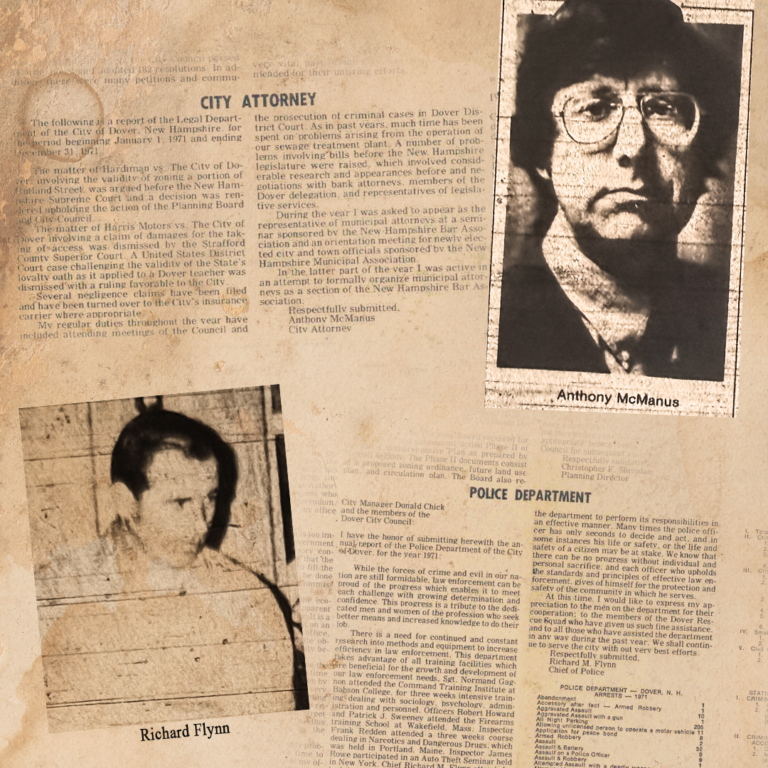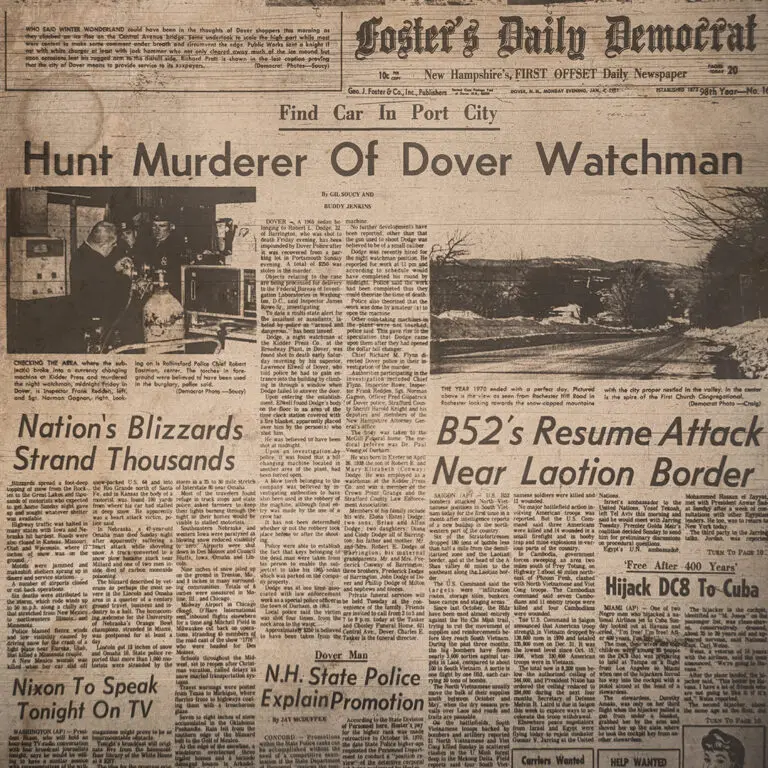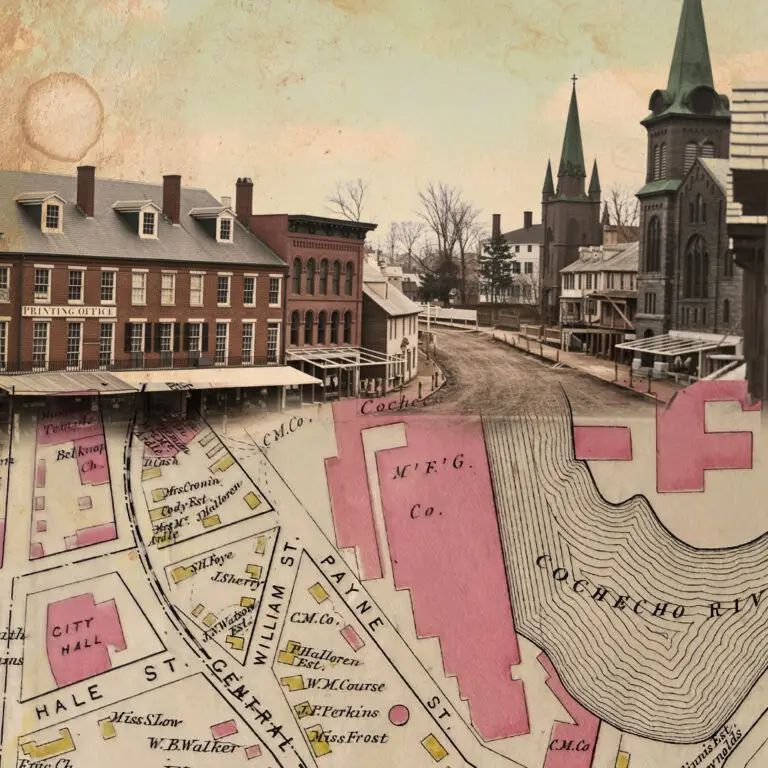
Dover historian Anthony McManus brings you “Infamous Dover: Crimes Along the Cochecho,” a compelling exploration of the Garrison City’s darker past. While Dover is celebrated as New Hampshire’s oldest settlement, known for its vibrant downtown, historic mill buildings, and its picturesque location along the Cochecho River, McManus delves into the shadowy chapters rarely explored in conventional histories: murders, robberies, scandals, and mysteries that once shocked the community and made headlines across New England. 

Ambush at the Eliot Bridge

March 15, 2026

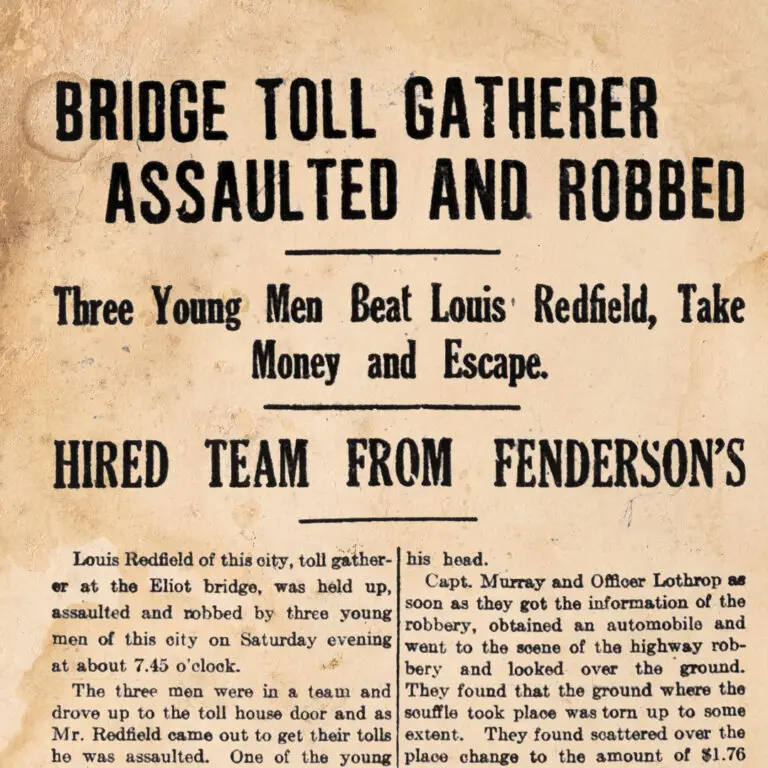
Ambush at the Eliot Bridge: The Toll Road Robbery of 1915 (Part 3)

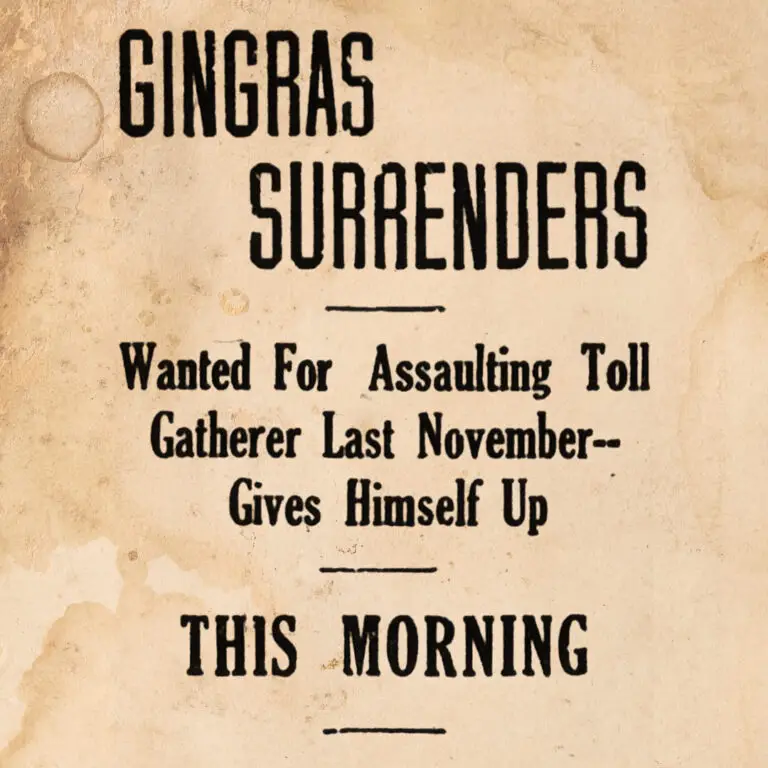
Three of the four suspects have faced the court. One remains unaccounted for, Joseph Gingras, the man whose whereabouts have been a mystery for months. Rumors placed him as far away as Canada. Then, on a July morning in 1916, he walks through the door of the Dover police station with a local attorney at his side.

In this brief but pivotal third installment, Anthony McManus reveals how Gingras finally answered for his role in both the Redfield robbery and the McCarthy saloon break-in — and what the court decided to do about it.

Previous "Crimes Along The Cochecho" columns:

Ambush at the Eliot Bridge

Ambush at the Eliot Bridge: The Toll Road Robbery of 1915 (Part 1)

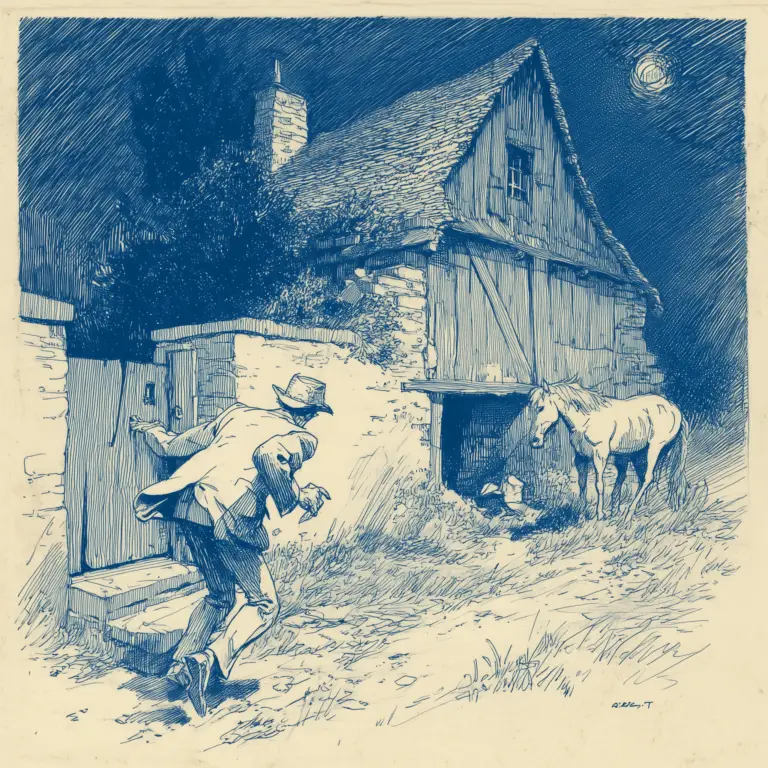
Saturday evening. Nov. 27, 1915. A horse-drawn wagon approaches the toll booth at the Eliot bridge, the crossing point between New Hampshire and Maine on what we know today as Gulf Road. Three men step out. One offers money to pay the toll. Then everything goes wrong.

In Part 1 of this four-part series, Anthony McManus follows the frantic manhunt that ensued after toll-taker Louis Redfield was attacked and robbed at his post, triggering a pursuit that stretched from Dover’s freight yards to Portland, from Laconia to Providence, Rhode Island. Officers chased tips across New England, Marshall Wilkinson sent postcards to police departments far and wide, and Asst. Marshall Crowley logged yet another out-of-state trip — this time to retrieve a suspect who was in the process of enlisting in the military. When one of the accused finally walked into the Dover police station, what he revealed upended everything investigators thought they knew.

But the crimes themselves are only part of the story. What happened in the courtroom may surprise you even more.

Ambush at the Eliot Bridge

Ambush at the Eliot Bridge: The Toll Road Robbery of 1915 (Part 2)

Edward McCabe has turned himself in. Now it’s time to face the court, and the charges are more complicated than anyone expected.

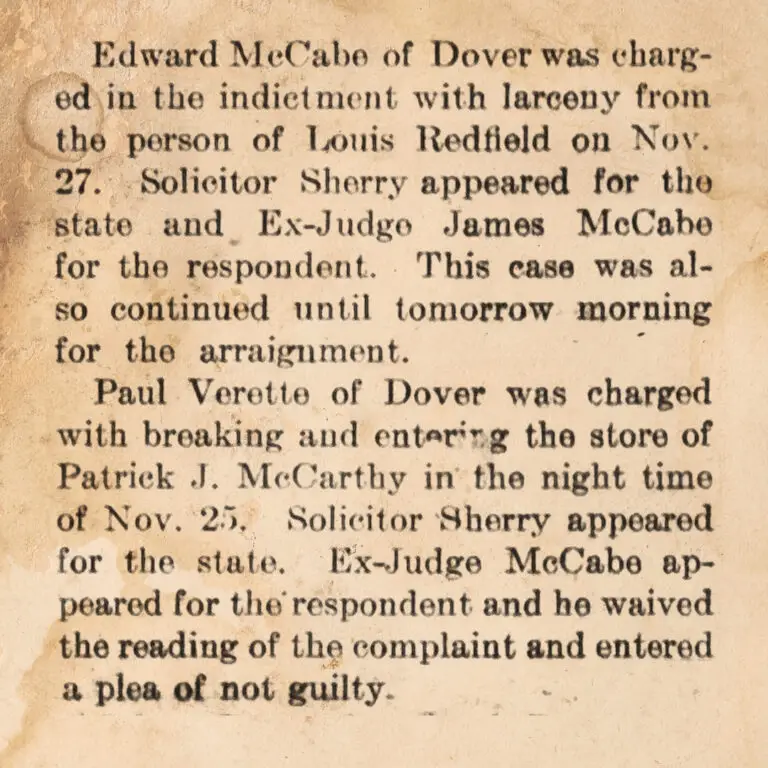
In Part 2, Anthony McManus follows the legal proceedings as McCabe’s case moves to Superior Court, where his plea takes an unexpected turn and Foster’s Daily Democrat disagrees with the official court record about what actually happened in the courtroom. Meanwhile, a second suspect — Robert Ainsworth — is tracked to a military recruiting station in Providence, Rhode Island, and his return to Dover draws a crowd of several hundred spectators to St. Thomas Street. But Asst. Marshall Crowley has no intention of giving them a show. And when the indictments are finally read, the crimes before the court aren’t quite what you’d expect, including a break-in at Patrick McCarthy’s Main Street saloon involving a quart of whiskey and a pile of nickels. A new name surfaces, a new arrest is made at Pacific Mills No. 1, and the connections between these young men and their crimes grow deeper.

The robbery at the toll booth was just the beginning.

Tragedy at the County Farm

Tragedy at the County Farm: The Shooting of Superintendent Willand (Part 1)

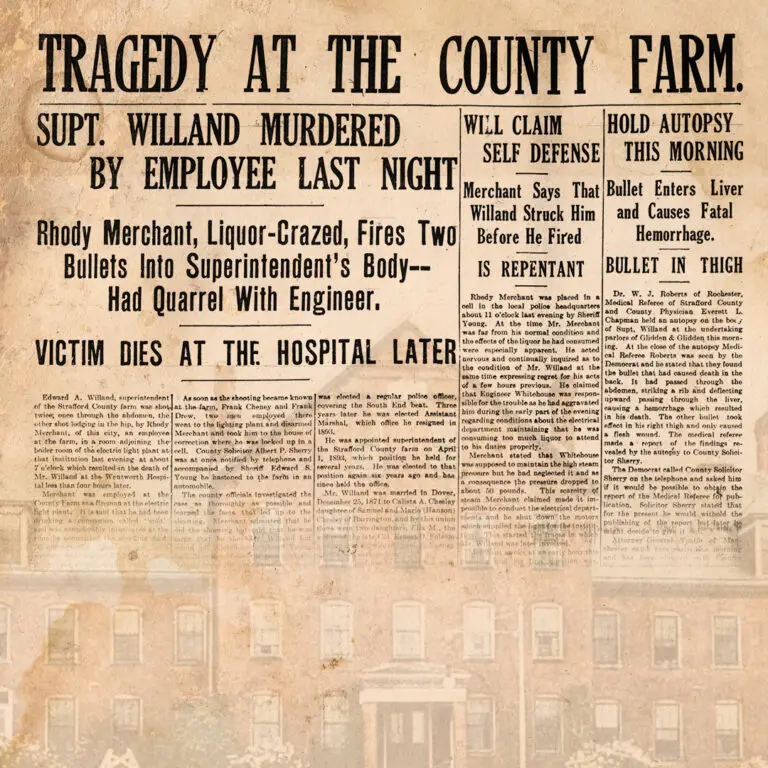
“TRAGEDY AT THE COUNTY FARM.” Three headlines. Two bullets. One deadly evening at the Strafford County electric light plant.

On July 9, 1915, an argument between coworkers at the Strafford County Farm escalated into something no one saw coming. When Superintendent Edward A. Willand arrived to make peace, a liquor-fueled confrontation ended with three shots from a .32-caliber revolver. The accused, fireman Rhody Merchant, made no attempt to flee, expressed immediate regret, and yet insisted he’d act again if given the chance with the man he truly blamed.

In Part 1 of this four-part series, Anthony McManus introduces a case that would grip Dover and generate such intense public interest that Foster’s had to print a second edition. A respected superintendent, a volatile employee with a colorful history involving the Central Avenue bridge, and a claim of self-defense that the evidence may not support. This is only the beginning of a tragedy that would deepen in ways no one could have predicted.

Tragedy at the County Farm

Tragedy at the County Farm: The Shooting of Superintendent Willand (Part 2)

The autopsy results are in and one critical detail about the bullet’s entry point could unravel Rhody Merchant’s claim of self-defense.

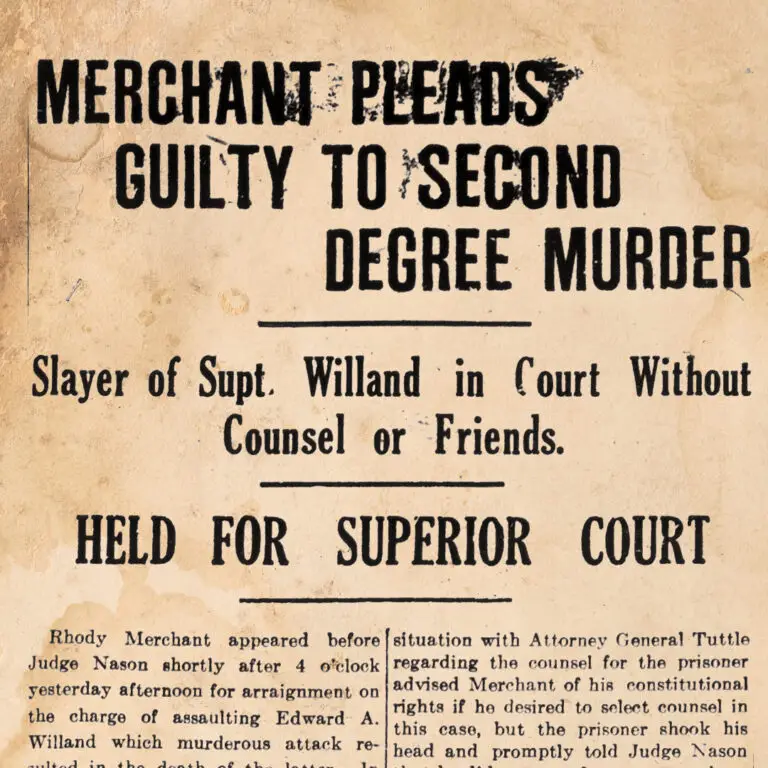
In Part 2, Anthony McManus reveals the life of the man behind the title of superintendent: Edward A. Willand’s remarkable journey from a tanner’s son in Berwick, Maine, to Rochester’s chief of police, to the man entrusted with rebuilding the County Farm just two months after a catastrophic fire killed 41 people. But as Dover mourned a citizen “esteemed by all who came in contact with him,” tragedy struck again. On the very night of the shooting, Mrs. Willand was found unconscious at the bottom of a stairway, her body “a mass of bruises.” And in a courtroom nearly empty of friends or supporters, Merchant stood alone — no counsel, no allies — and entered a plea that left many predicting he’d soon change his mind.

Two ceremonies one week apart. A community shaken. And a case far from over.

Tragedy at the County Farm

Tragedy at the County Farm: The Shooting of Superintendent Willand (Part 3)

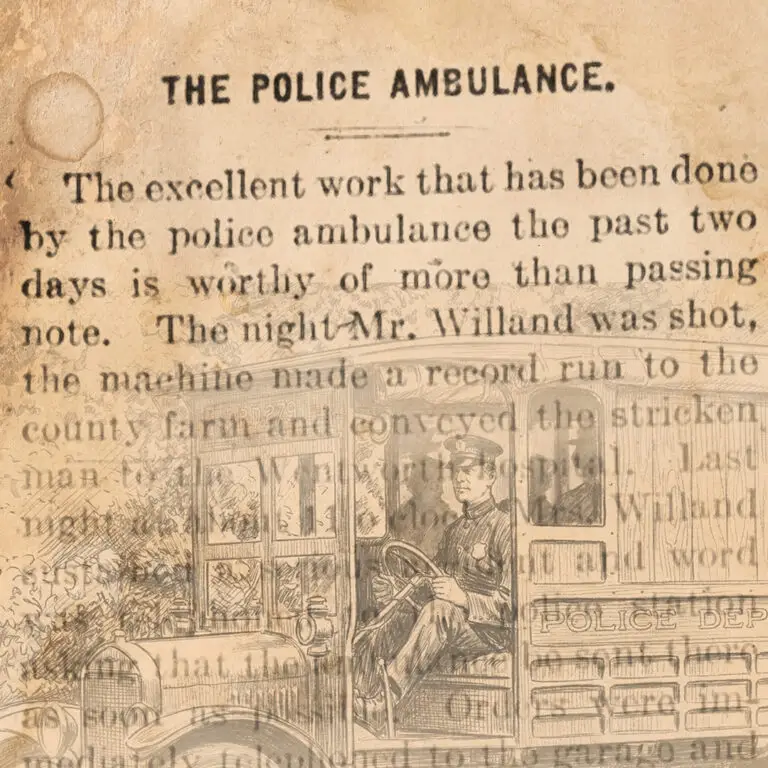
Dover’s police ambulance races through the night, “all speed laws disregarded,” as a Foster’s editorial seizes the moment to settle a score over a “foolish injunction” that prevents officers from driving the vehicle themselves.

In Part 3, Anthony McManus follows the aftermath of the Willand tragedy as the county commissioners scramble to manage the farm in the superintendent’s absence, taking turns at the helm day by day. A first-degree murder indictment is handed down in September, but the road to trial proves anything but smooth — postponements pile up as the attorney general’s schedule and a conflict with an ongoing trial push the date from October to November. Attorney W.W. Scott, now representing Merchant, asks for more time. A jury pool of 74 men is assembled. And then, just as Dover braces for what promised to be a sensational trial, Merchant makes a decision that changes everything, and deprives Foster’s Daily Democrat of the dramatic courtroom spectacle its readers were clearly hungry for. How hungry? The paper had to print a second edition just to meet demand.

What happened next stunned the courtroom, and only a handful of spectators were there to witness it.

Tragedy at the County Farm

Tragedy at the County Farm: The Shooting of Superintendent Willand (Part 4)

“I will leave the matter to his wise discretion.”

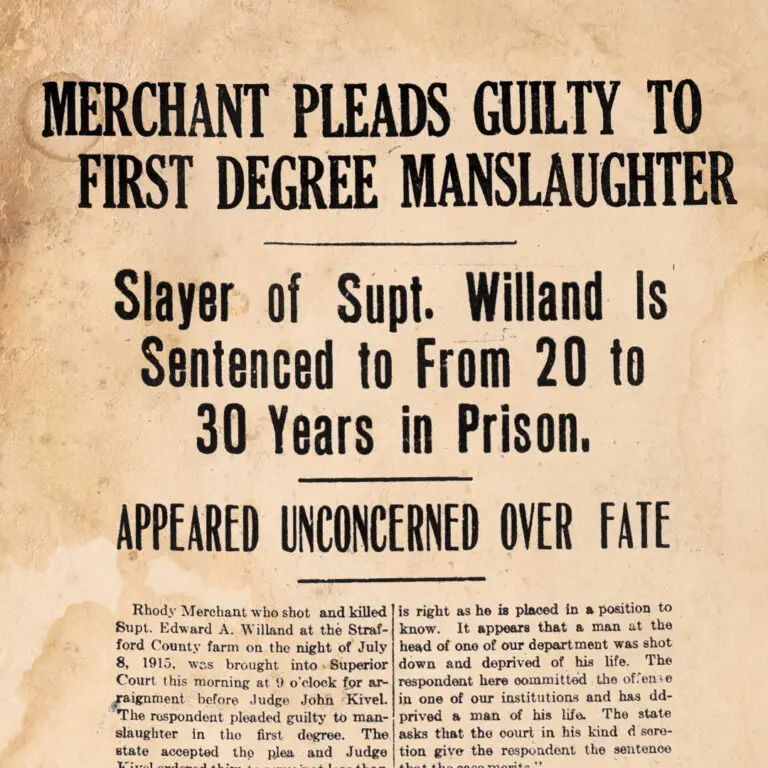
With those words, attorney W.W. Scott placed 58-year-old Rhody Merchant’s fate entirely in the hands of Judge Kivel. The maximum sentence — 30 years — would mean, in effect, dying behind bars. The courtroom was nearly empty. The prisoner stood calm, apparently resigned.

In this concluding installment, Anthony McManus reveals the sentence that brought the Willand case to a close and follows Merchant as he’s placed on the 10:58 train to Concord with Sheriff Young and Deputy Sheriff Goodwin. But Merchant wasn’t the only man in irons that day. Shackled to him for the ride was a con artist with three names, a talent for disappearing, and an audacious scheme involving stolen diamond rings, a traveling theater company, and a jewelry store clerk left waiting outside a dressing room door. His trail led from Dover to Boston to Milwaukee — and ultimately back to Judge Kivel’s courtroom.

Two men. One train. Two very different crimes. The final chapter of a tragedy — and a swindle — that captivated Dover in 1915.

Howard Jewelry Heist

The Howard Jewelry Heist: Tracking Stolen Diamonds Through Dover's Snowbanks (Part 1)

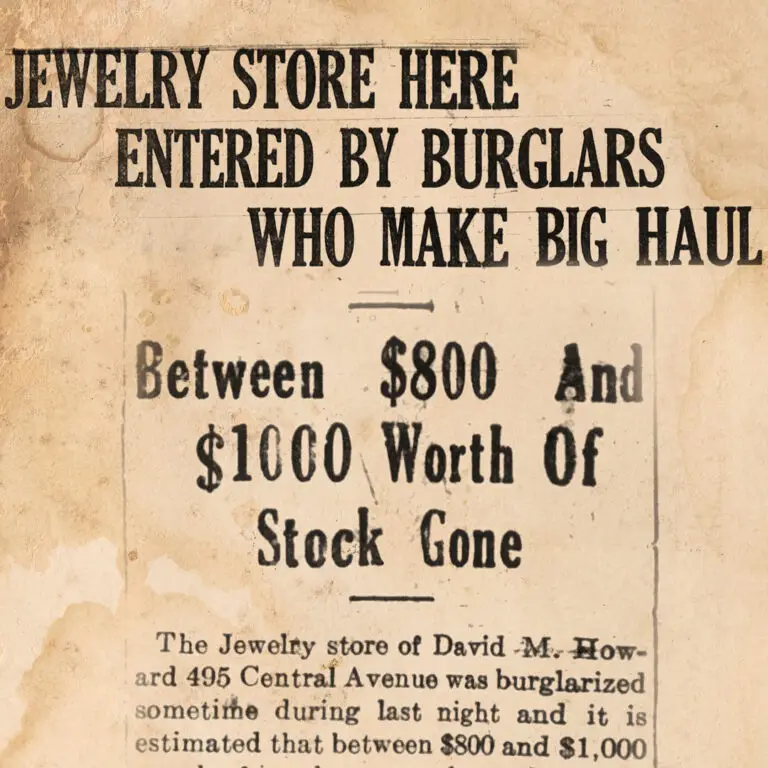
February 1920. David M. Howard arrives at his Franklin Square jewelry store to discover it has been ransacked. Diamonds, gold, and silver watches, chains, charms, and rings were all stolen, worth nearly $15,000 in today’s money. The police have “scarcely a clue” to work with. Then, three weeks later, a man walks into the store with a watch needing repairs. Store clerk Albert Allie recognizes it immediately as one of the stolen items.
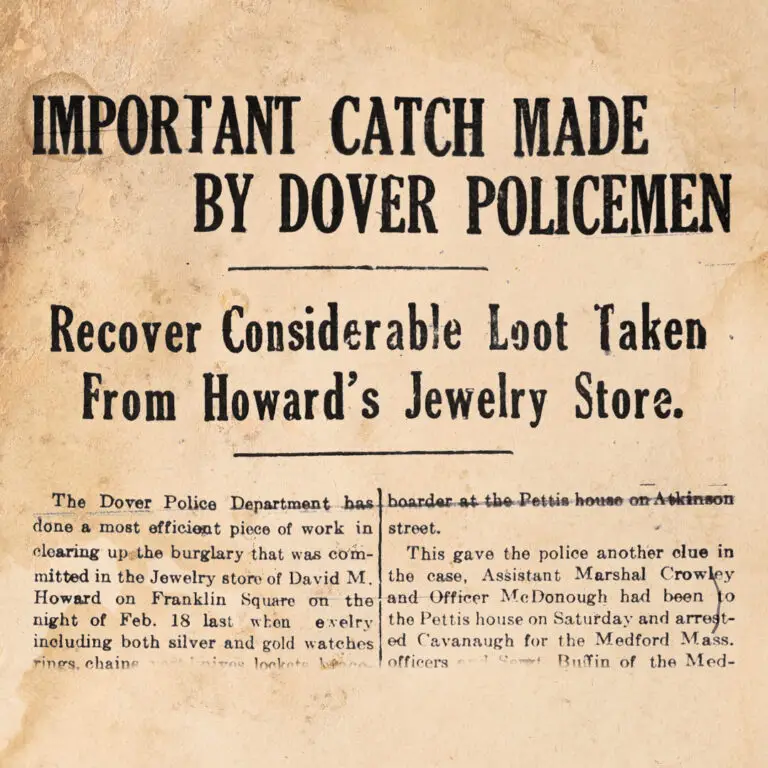
In Part 1 of this two-part series, Anthony McManus follows the trail from a suspicious watch repair to a mysterious “boy” too young to be named in the newspaper (but old enough to work at the shipyard), to a black leather bag discovered in an attic, to jewelry thrown into snowbanks during a police raid. The case leads Assistant Marshal Crowley on a journey to Medford, Mass. where a confession finally breaks the case wide open.

Sometimes solving a burglary requires patient detective work, informants, searchlights, and a voluntary confession on “the paper train from Boston.”

Tragedy at the County Farm

The Howard Jewelry Heist: Tracking Stolen Diamonds Through Dover's Snowbanks (Part 2)

Joseph Cavanaugh sits in the Dover police station after confessing to the Howard jewelry store burglary when an unexpected visitor arrives—his wife, the same woman who swore out the non-support complaint that led to his initial arrest in Medford. What transpired during their conversation remains unknown, but a letter soon arrives from Portland, Maine, revealing Cavanaugh’s criminal past: a 1917 larceny conviction and time served at Maine State Prison in Thomaston.

In this concluding installment, Anthony McManus follows Cavanaugh from his arraignment through sentencing, as Judge Kivel hands down his sentence after learning the defendant was not only a “graduate of Thomaston” but had also stolen clothes in Boston. But the story doesn’t end there. McManus reveals a personal connection to Dover’s justice system when he discovers and interesting family connection. Sometimes the most surprising revelations in historical research hit close to home.

Crimes and Consequences

November 1915: Crime and Consequences (Part 1)

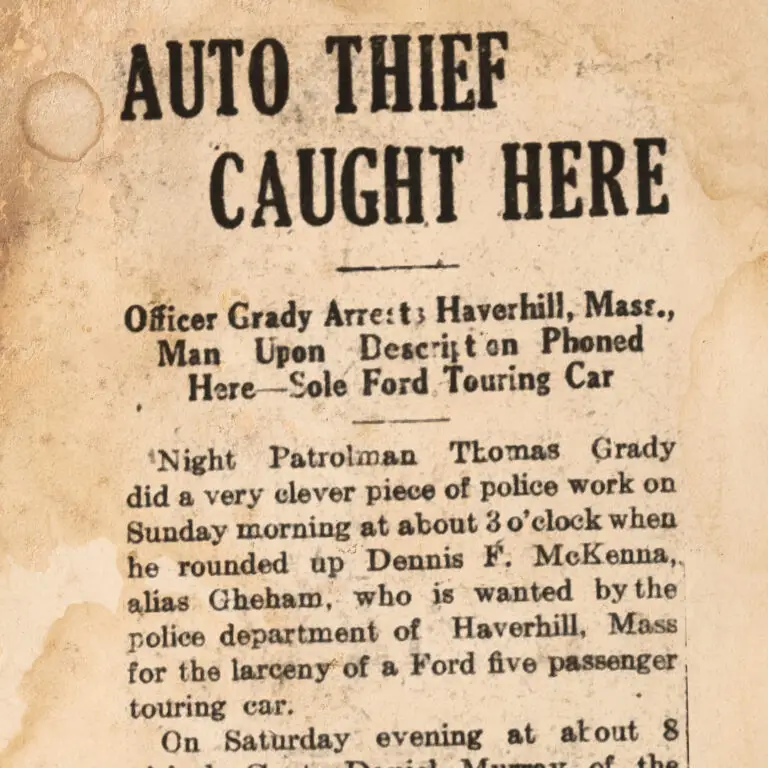
November 1915. Dover’s population hovers around 15,000, but criminal activity keeps the police department busy around the clock. An escaped convict returns to town and gets arrested “on suspicion” by officers who don’t even recognize him. A stolen Ford touring car leads to a dramatic 3 a.m. arrest on the Upper Square. And Judge Nason makes it clear that the days of leniency for “Sunday drunks” are numbered.

In Part 1 of this three-part series, Anthony McManus offers a snapshot of everyday law enforcement in early 20th-century Dover, where even minor offenses carried serious consequences and a night of drinking on the Lord’s Day could land you at the County Farm. From car thieves to escaped prisoners to citizens pleading for the police department to acquire a car, these November cases reveal a city grappling with modern crime amid rapid change.

Welcome to Dover in 1915, where the punishment often fit the times, not the crime.

Crimes and Consequences

November 1915: Crime and Consequences (Part 2)

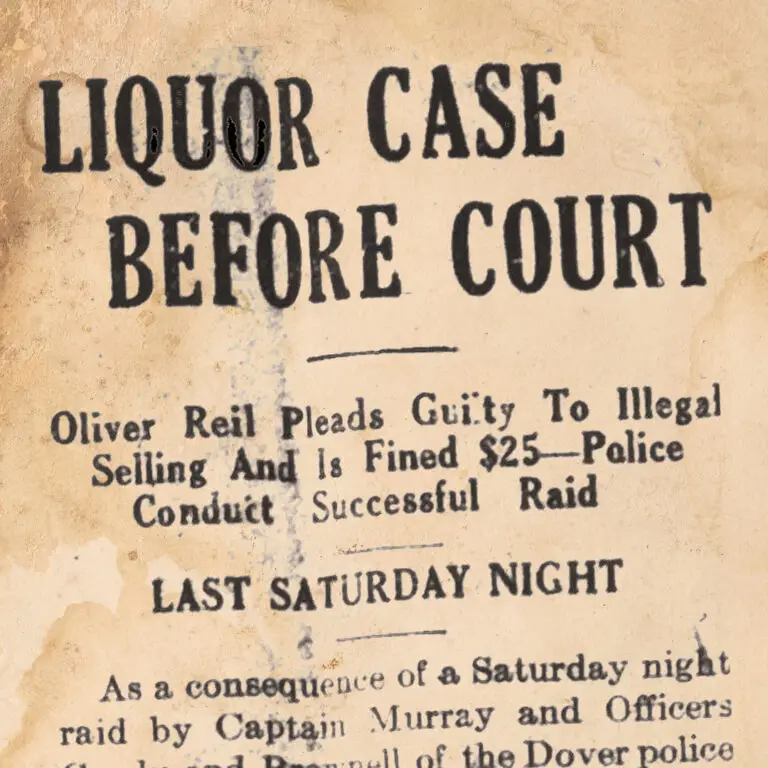
A dress suitcase filled with a dozen pint bottles of liquor comes flying out a window on Cocheco Street as police pound on the door with a search warrant. Inside, they find a case of beer and arrest Oliver Reil for running a “speak easy” from his home. His sentence: 60 days in jail and $33.62 in fines and court costs he can’t afford to pay. Welcome to Dover’s war on illegal alcohol, five years before Prohibition even begins.

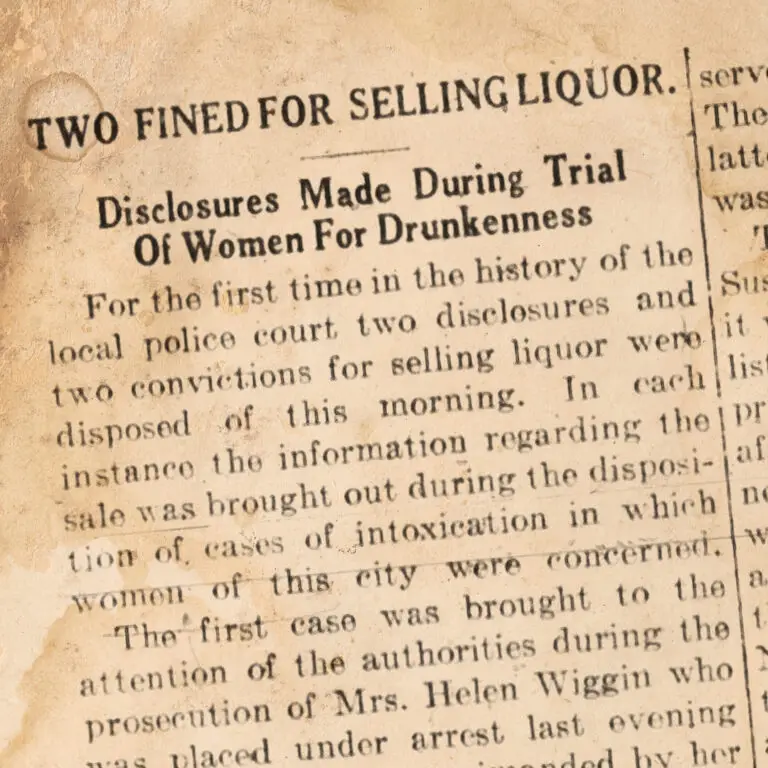
In Part 2 of a series, Anthony McManus reveals the curious world of Dover’s “dry list,” a roster of residents legally forbidden from purchasing liquor. When Mrs. Helen Wiggin shares a half-pint with a visitor while her husband is away, both end up in court. When Mrs. Susan Nason sends her neighbor to buy whiskey despite being on the list, he faces jail time despite being unaware she was banned. And seven years later, a familiar name resurfaces in a scandalous adultery case that proves some Dover stories have unexpected sequels.

Before Prohibition, Dover had its own laws and “dry listers” who tested them daily.

Crimes and Consequences

November 1915: Crime and Consequences (Part 3)

The same day that Dover’s court convicted two people for violating the dry list, another case unfolded that would stretch nearly two years into the past. Albert C. Leary woke up in a Central House hotel room after a night of drinking to discover he’d been robbed—$80 in bills, a $5 gold piece, a revolver, and his gold watch had vanished. The man who’d “helped” him to his room? Gilbert Reynolds, now finally in custody and facing charges for a crime committed back in July 1913.

In this concluding installment, Anthony McManus reveals the curious details of a larceny case that took nearly two years to reach court. A Boston tattoo artist for Barnum & Bailey testifies about a suspicious pawn ticket. Judge Nason sets bail at $1,000, over $32,000 in today’s money. And Reynolds files a desperate petition claiming ill health and tuberculosis, seeking release from custody. But the most unusual aspect isn’t the crime itself—it’s Foster’s Daily Democrat getting basic facts wrong, a rarity in McManus’ extensive research.
This series concludes with a mystery: what happened to Gilbert Reynolds?

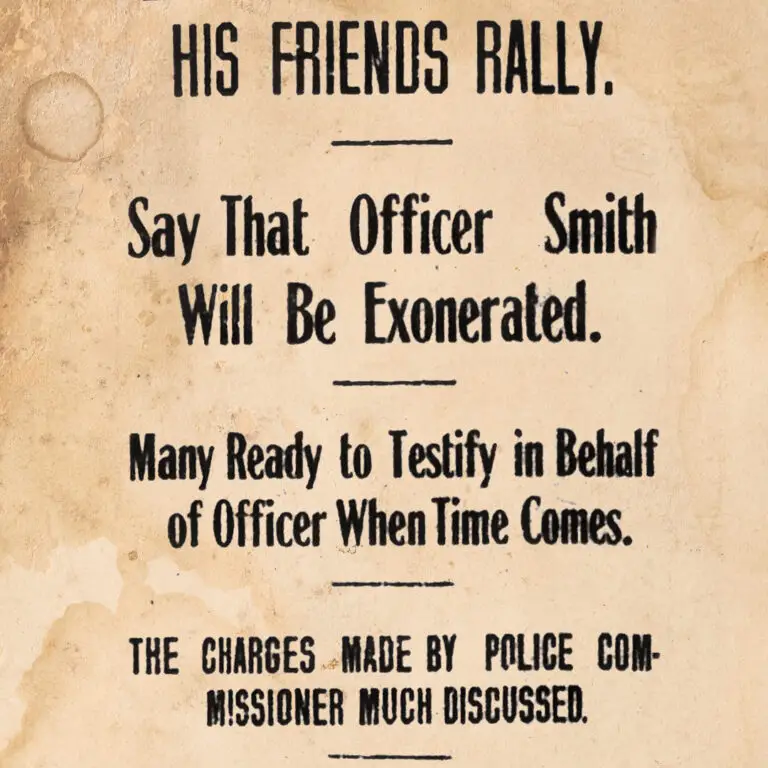
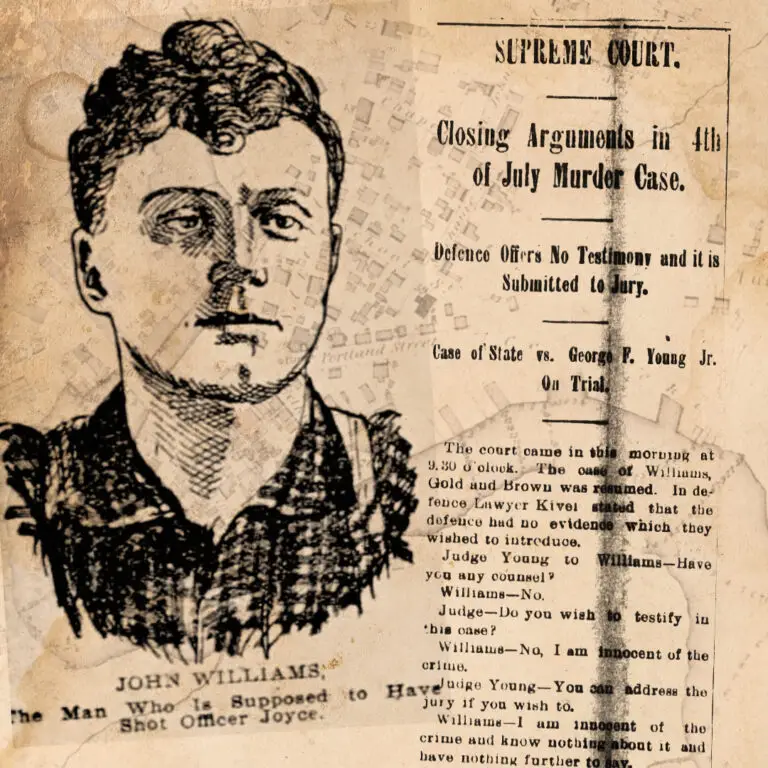
John Williams pardon

Innocence or Intrigue? The Campaign to Free John Williams (Part 1)

“I am innocent of the crime. I know nothing about it.”

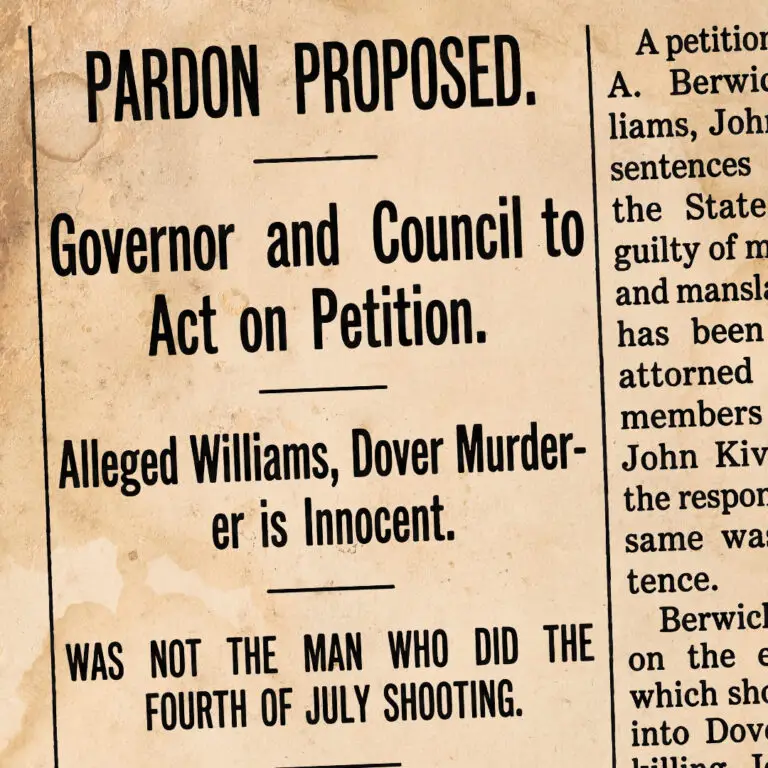
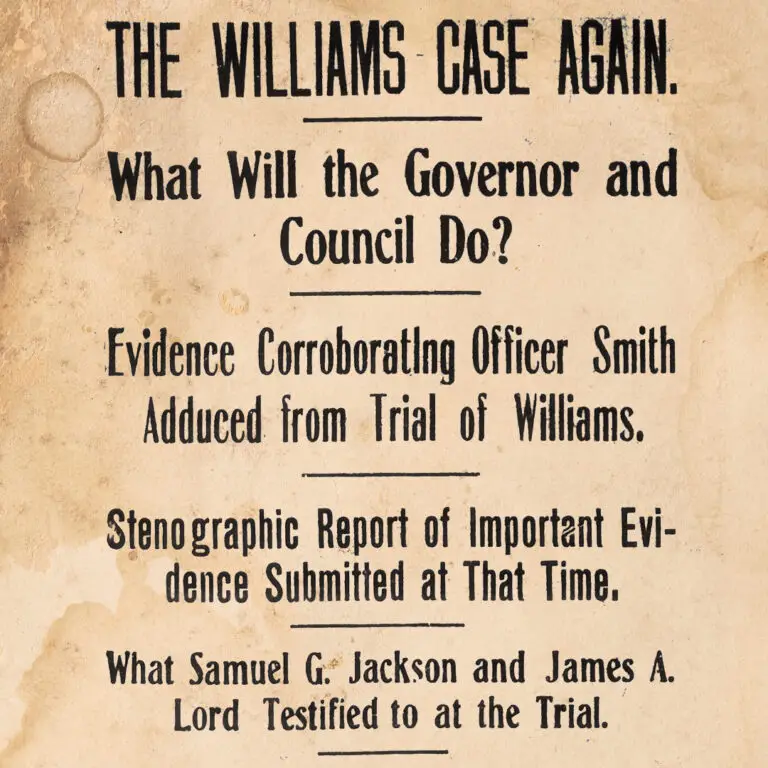
John Williams, convicted killer from the notorious July 4, 1900, shootout, maintained his innocence even as the judge handed down a life sentence. The evidence seemed overwhelming. The jury was convinced. Yet seven years later, something extraordinary happened: Dover’s own Deputy Sheriff Bert Wentworth launched a crusade to free Williams, risking his reputation to discredit testimony from one of his own police officers.

In Part 1 of this four-part series, Anthony McManus reveals the beginning of an astonishing pardon petition that would pit officer against officer, raise questions about justice and truth, and expose surprising new claims about what really happened during Dover’s deadliest Fourth of July. Was Williams truly innocent, or was something else at play?

The answers prove far more complicated than anyone expected.

John Williams pardon

Innocence or Intrigue? The Campaign to Free John Williams (Part 2)

The hearing before the Governor and Council exposes shocking contradictions. Deputy Sheriff Bert Wentworth claims Officer George Smith wasn’t even at the scene when the fatal shots were fired, yet Smith had testified under oath that he witnessed Williams do the shooting. When a Councilor demands to know why Wentworth hasn’t fired an officer he believes to be untruthful, his cryptic response raises more questions than answers: “We are waiting to see what you will do in this case.”

In Part 2, Anthony McManus reveals how Wentworth’s investigation uncovered two previously unidentified members of the July 4th gang, including a mysterious “big man” with reddish hair who some believe was the real killer. But Wentworth’s methods grow increasingly strange: midnight meetings with unnamed witnesses, trips to Canada and Massachusetts prisons, and veiled hints about information he refuses to disclose publicly.

As the petition is taken under advisement, Dover’s newspaper editors begin to question whether this campaign serves justice or something far more dangerous.

John Williams pardon

Innocence or Intrigue? The Campaign to Free John Williams (Part 3)

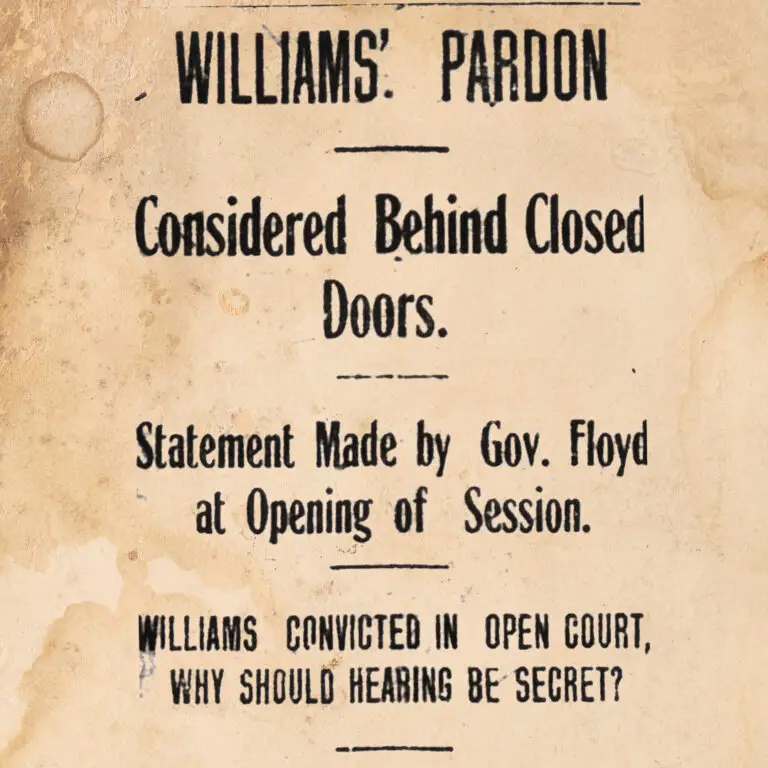
The stakes escalate as another hearing convenes before the Governor and Council, this time held behind closed doors. A “secret session” that even Foster’s Daily Democrat questions: “There does not appear to be any reason for holding a secret session on a petition for his pardon.” Officer Smith attends with witnesses who corroborate his presence at the shooting. County Solicitor Dwight Hall defends Smith’s character. But once again, the decision is tabled.

In Part 3, Anthony McManus reveals an astonishing complication: authorities from two countries now converge on Concord, both hoping to take Williams into custody if he’s released. A high constable travels from Sherbrooke, Canada, determined to return Williams to the prison from which he escaped seven years earlier. And Bert Wentworth? He’s allegedly making deals, offering to reveal the whereabouts of another escaped prisoner if the Canadian authorities back off.

As rumors swirl that Williams will be pardoned and turned over to Massachusetts, Dover waits. The case that once seemed so straightforward has become a tangled web of competing jurisdictions, questionable motives, and international intrigue.

John Williams pardon

Innocence or Intrigue? The Campaign to Free John Williams (Part 4)

“Rumor Has it that Williams Will be Pardoned.” As the final hearing approaches in late 1907, tensions reach their peak. The Attorney General arrives in Dover gathering additional affidavits and preparing to present the entire stenographic trial record. Foster’s Daily Democrat publishes a passionate editorial arguing that Williams should not be pardoned based on hearsay when he was convicted on eyewitness testimony. Inspector O’Dowd waits in Manchester with arrest orders from the British Consul. Hiram Moe makes yet another journey from Canada, ready to take Williams into custody.

In this concluding installment, Anthony McManus reveals the dramatic finale of the eighteen-month campaign. When the Governor and Council finally vote, the result stuns everyone, but the ultimate decision rests with one man. As Bert Wentworth publishes a defensive letter claiming his actions have been misrepresented, the question that has haunted this case finally gets answered: Will John Williams walk free, or will he remain behind bars?

The conclusion to one of Dover’s most controversial legal battles reveals that sometimes the fight for justice—or is it something else?—can be as compelling as the crime itself.

Larkin Soap Con

Smooth-Tongued Swindler: The Larkin Soap Con

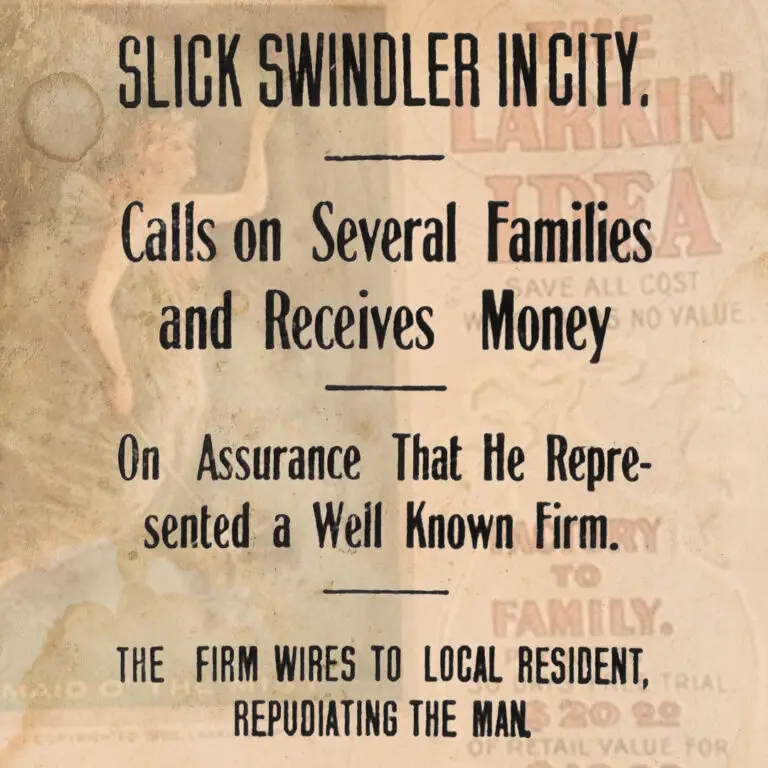
Not all of Dover’s criminals wielded guns or committed violent acts. Some relied on charm, deception, and an “oily tongue” to separate honest citizens from their money. In this entertaining departure from “murder and mayhem,” Anthony McManus reveals the story of the mysterious Mr. Myers (or was it Mr. Adams?), a well-dressed confidence man who descended on Dover in August 1907 claiming to represent the famous Larkin Soap Company. Targeting women who organized soap-buying clubs, this smooth operator convinced multiple victims to hand over cash with promises of “double premiums” and company checks that would never materialize. When the Tibbetts family grew suspicious of his evasive answers and lack of credentials, he simply moved on to easier marks, ultimately walking away with $40 (nearly $2,800 in today’s money) before Dover police could catch him.

Leo Maloney Trial

Death on Dover Point Road: The Leo Maloney Trial (Part 1)

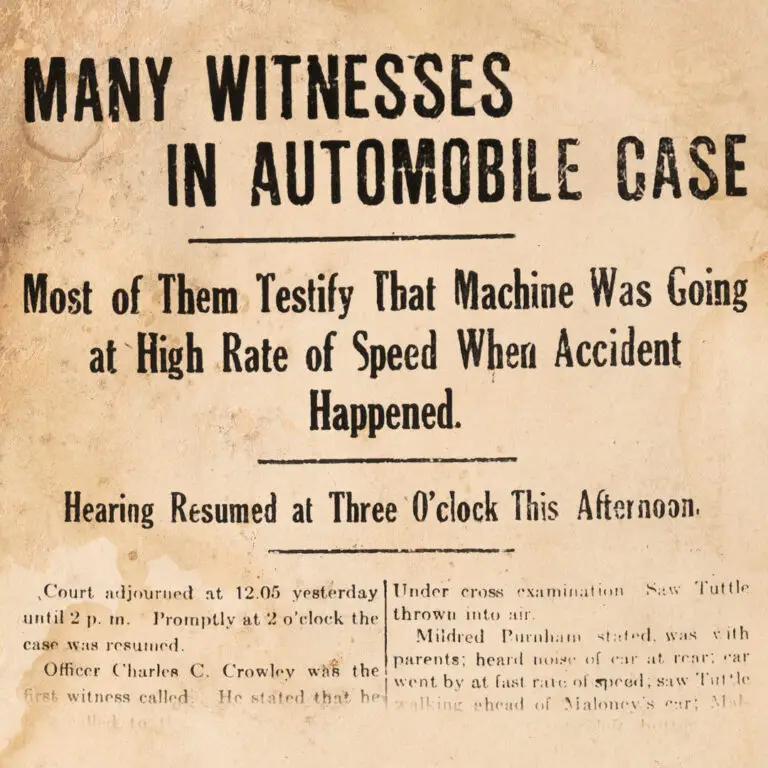
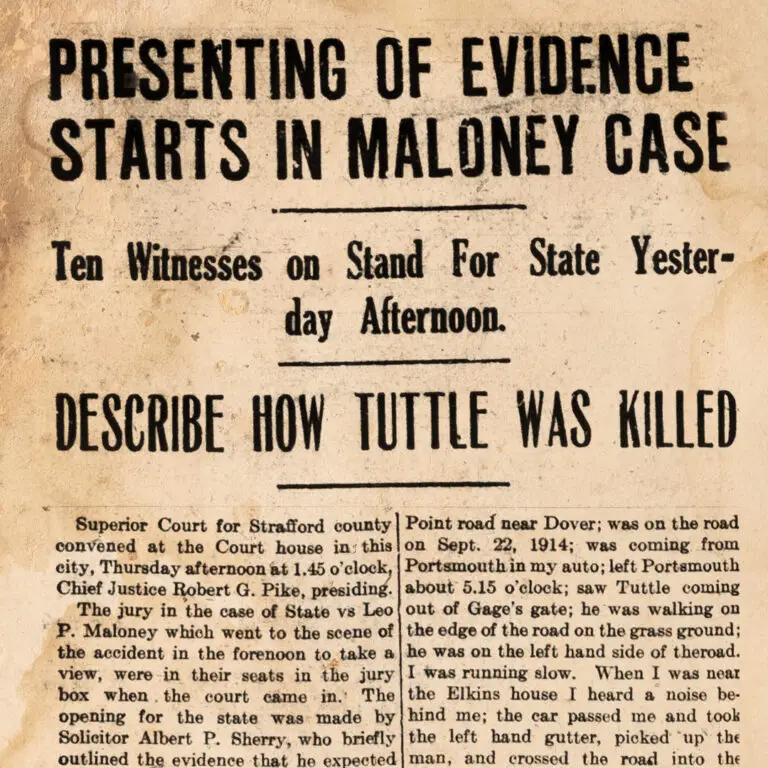
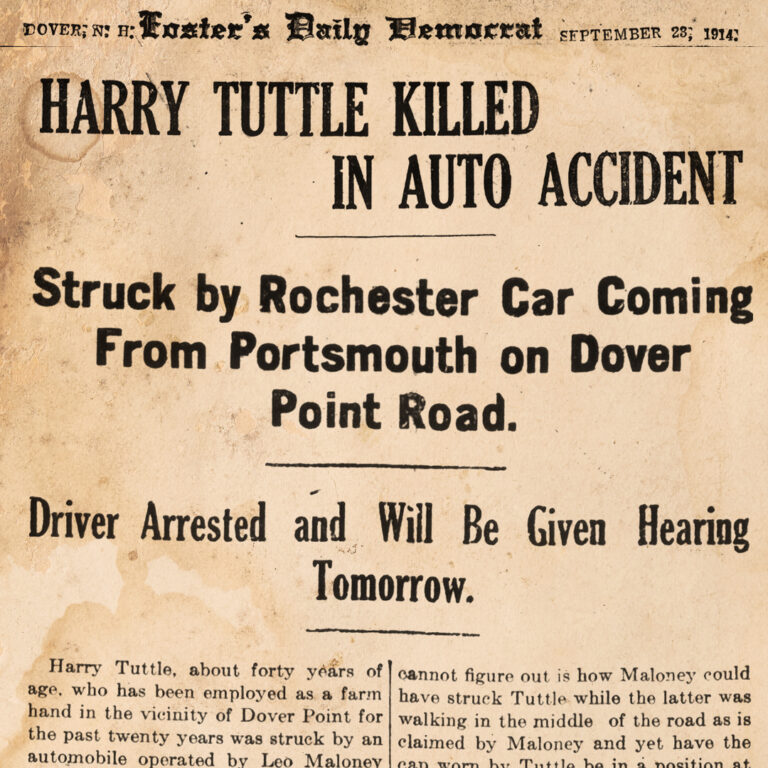
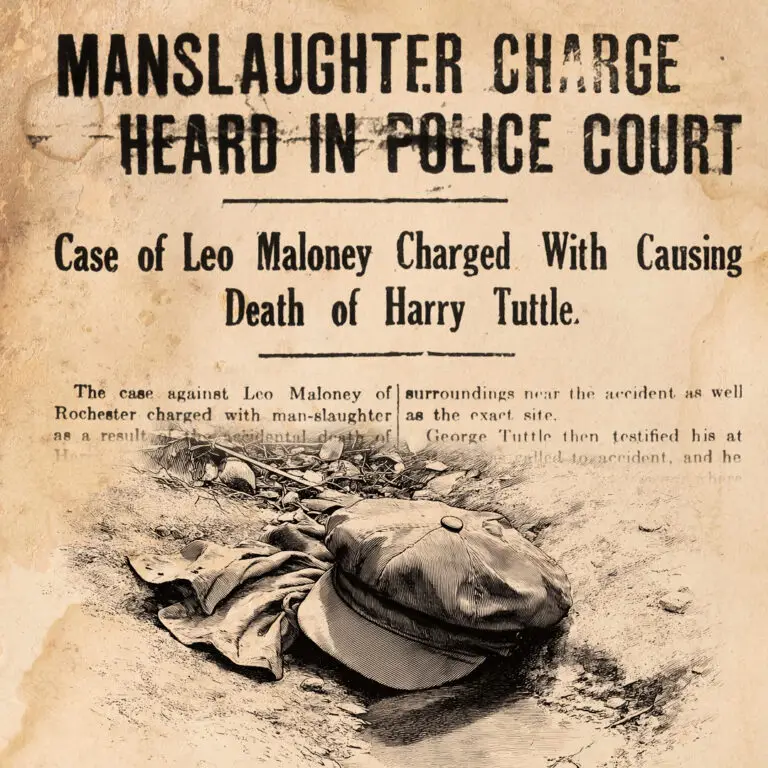
Sept. 22, 1914: Harry Tuttle was walking home from a day’s work at the Elbridge Gage Farm when a speeding automobile struck him on Dover Point Road, throwing him into the air and ending his life. In this first installment of a six-part series, Anthony McManus reveals one of Dover’s earliest vehicular manslaughter cases, a tragedy that would test the limits of justice in an era when automobiles were still new, drunk driving laws barely existed, and witnesses disagreed about everything from speed to sobriety. The driver was Leo Maloney, summer chauffeur to Rochester’s Rev. Charles Lacroix, who had spent the afternoon drinking beers in Somersworth, Dover, and Portsmouth before getting behind the wheel of Fr. Lacroix’s Jackson touring car. What began as a joyride with friends ended with a farmworker dead in a ditch, conflicting witness accounts, and Dover’s police arriving on motorcycles, a technological advancement for a department still using horse-drawn vehicles just years before. Don’t miss this compelling exploration of how Dover’s justice system grappled with the deadly consequences of America’s new love affair with the automobile.

Harry Tuttle

Death on Dover Point Road: The Leo Maloney Trial (Part 2)

The investigation deepens as Dover authorities uncover troubling details about Leo Maloney’s afternoon of drinking and his employer’s expensive automobile. In this second installment, Anthony McManus reveals the fascinating story behind the driver, a Massachusetts chauffeur hired each summer to drive Rev. Charles Lacroix’s Jackson touring car, a rare and powerful six-cylinder machine that could reach speeds unimaginable to most Dover residents. What seemed like a simple joyride with friends becomes far more complicated as investigators piece together stops at drinking establishments in three different cities, conflicting accounts of beer consumption, and Maloney’s own shifting explanations for how the accident occurred. From claims of avoiding a Ford in the center of the road to mysterious damage on walnut trees and fence posts that may not exist, McManus expertly reconstructs how Dover’s police built their case against a man whose breath reeked of alcohol but whose victims’ family would ultimately seek mercy. Don’t miss this chapter where modern forensics meets old-fashioned detective work, and a priest’s loyalty to his chauffeur sets the stage for a courtroom battle that would captivate Dover.

Harry Tuttle

Death on Dover Point Road: The Leo Maloney Trial (Part 3)

The investigation deepens as Dover authorities uncover troubling details about Leo Maloney’s afternoon of drinking and his employer’s expensive automobile. In this second installment, Anthony McManus reveals the fascinating story behind the driver, a Massachusetts chauffeur hired each summer to drive Rev. Charles Lacroix’s Jackson touring car, a rare and powerful six-cylinder machine that could reach speeds unimaginable to most Dover residents. What seemed like a simple joyride with friends becomes far more complicated as investigators piece together stops at drinking establishments in three different cities, conflicting accounts of beer consumption, and Maloney’s own shifting explanations for how the accident occurred. From claims of avoiding a Ford in the center of the road to mysterious damage on walnut trees and fence posts that may not exist, McManus expertly reconstructs how Dover’s police built their case against a man whose breath reeked of alcohol but whose victims’ family would ultimately seek mercy. Don’t miss this chapter where modern forensics meets old-fashioned detective work, and a priest’s loyalty to his chauffeur sets the stage for a courtroom battle that would captivate Dover.

Leo Maloney

Death on Dover Point Road: The Leo Maloney Trial (Part 4)

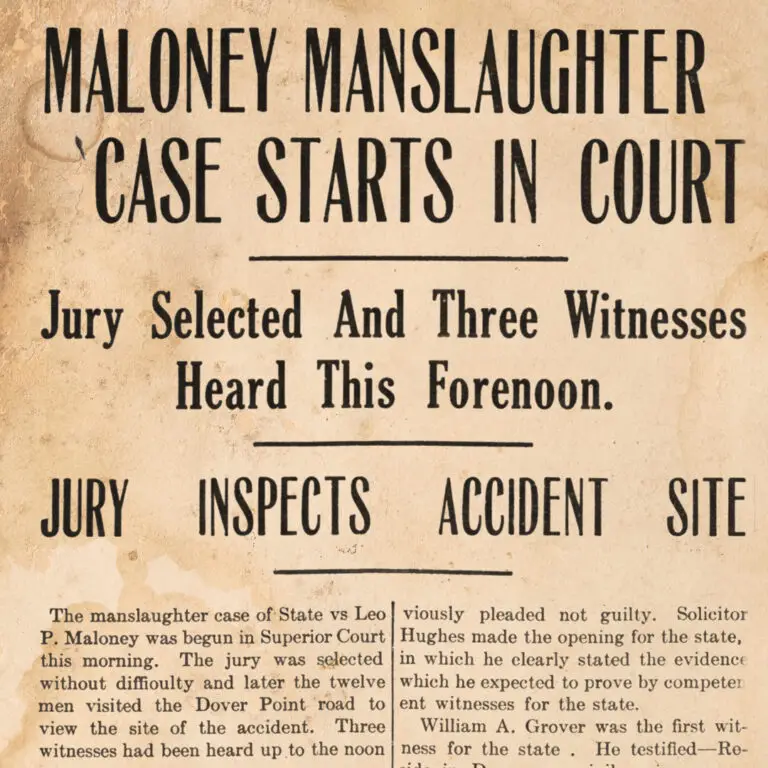
The stakes rise as Leo Maloney’s case reaches Superior Court, where front-page headlines compete with armed robbery cases and bag thefts for Dover’s attention. In this fourth installment, Anthony McManus reveals the high-stakes drama of the full trial before Judge Robert Chamberlain, where a jury tour of Dover Point Road sets the stage for testimony that will determine whether Maloney was a reckless drunk driver or an unlucky victim of tragic circumstances. Civil engineer William Grover, who actually helped build the road itself, provides crucial testimony about a 36-foot-wide roadway that should have allowed three vehicles to pass safely, raising troubling questions about why Maloney’s Jackson automobile ended up in a ditch. The most explosive moment comes when Maloney himself takes the stand, always a risky move in a criminal trial, claiming Harry Tuttle “jumped” in front of his car while admitting for the first time he’d been carrying two unopened quarts of liquor from Portsmouth. After nearly 23 hours of jury deliberation, McManus reveals the shocking vote that left everyone stunned and guaranteed this case was far from over.

Leo Maloney

Death on Dover Point Road: The Leo Maloney Trial (Part 5)

A second chance at justice brings Leo Maloney back to Dover’s courtroom, but this time Dover’s own Judge Robert Pike presides over a trial that will feature new theories, unexpected testimony, and a dramatic interruption no one saw coming. In this fifth installment, Anthony McManus reveals how the retrial exposes fascinating details about Dover Point Road’s construction in 1910 and the mysterious “ruts” that may have been caused by Maloney’s own desperate attempts to regain control. George Tuttle challenges the civil engineer’s testimony with his own theory about what those tracks really mean, while Dover police officers paint an increasingly damning picture of a driver whose “crazy statements” kept changing. But the most startling moment comes when ex-Judge James McCabe takes the witness stand—the same judge who presided over Maloney’s preliminary hearing—in a breach of judicial ethics that would be unthinkable today. As witnesses pile up on both sides and the jury prepares to deliberate, an unexpected family tragedy forces the trial to halt, leaving Maloney’s fate hanging in the balance while Dover turns its attention to the World Series and a grieving juror buries his mother.

Leo Maloney

Death on Dover Point Road: The Leo Maloney Trial (Part 6)

A second chance at justice brings Leo Maloney back to Dover’s courtroom, but this time Dover’s own Judge Robert Pike presides over a trial that will feature new theories, unexpected testimony, and a dramatic interruption no one saw coming. In this fifth installment, Anthony McManus reveals how the retrial exposes fascinating details about Dover Point Road’s construction in 1910 and the mysterious “ruts” that may have been caused by Maloney’s own desperate attempts to regain control. George Tuttle challenges the civil engineer’s testimony with his own theory about what those tracks really mean, while Dover police officers paint an increasingly damning picture of a driver whose “crazy statements” kept changing. But the most startling moment comes when ex-Judge James McCabe takes the witness stand—the same judge who presided over Maloney’s preliminary hearing—in a breach of judicial ethics that would be unthinkable today. As witnesses pile up on both sides and the jury prepares to deliberate, an unexpected family tragedy forces the trial to halt, leaving Maloney’s fate hanging in the balance while Dover turns its attention to the World Series and a grieving juror buries his mother.

Scandal on Sonnett Street

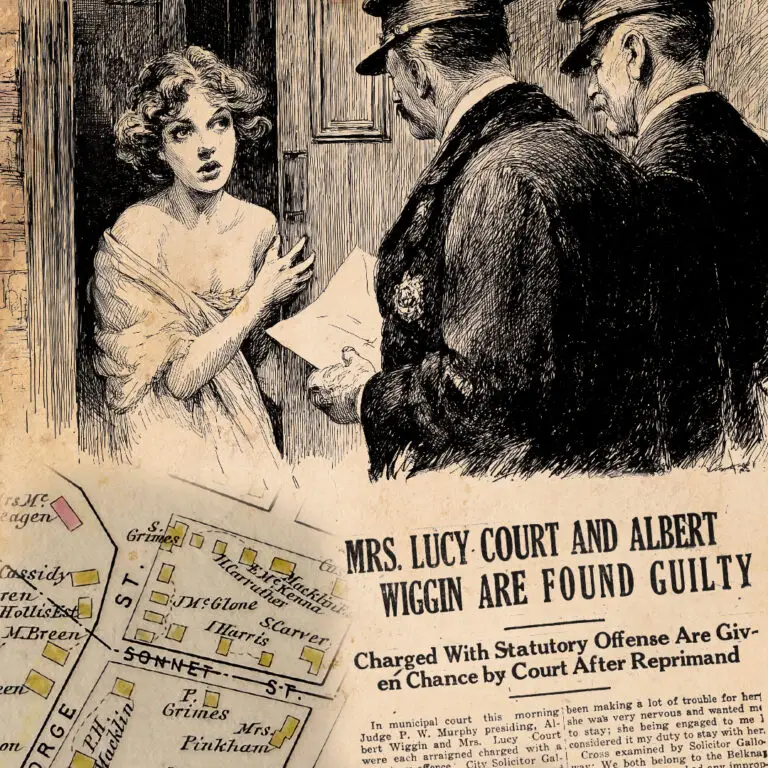
A Scandal on Sonnett Street: The Court-Wiggin Affair (Part 1)

Judge Patrick Murphy delivers his verdict, but his reasoning reveals as much about 1920s Dover as it does about justice. In this concluding installment, Anthony McManus explores the fascinating backdrop to the Court-Wiggin case, from the unique Belknap Church where the couple met—built with retail space below and sanctuary above, to the anti-Catholic Orangemen fraternal organization that kept Albert Wiggin out late on suspicious nights. McManus also pays tribute to Assistant Marshal John McDonough, whose testimony helped seal the case but whose own tragic story would end just a year later when he collapsed on duty while searching for a missing child. The judge’s harsh words for Lucy Court—”a woman who is mother of eight children should have some decency”—and City Solicitor Galloway’s cold calculation that “the county might as well support her at the farm” expose the cruel intersection of poverty, morality, and public assistance in early 20th century America. Don’t miss the surprising conclusion as Judge Murphy hands down his sentence with an unexpected twist, and McManus reveals what became of the couple’s April wedding plans in a story that reminds us how radically our views on personal freedom have evolved.

Scandal on Sonnett Street

A Scandal on Sonnett Street: The Court-Wiggin Affair (Part 2)

January 14, 1922: Dover’s District Court confronts a case so delicate that Foster’s Daily Democrat refuses to print the actual charge, referring only to a “Statutory Offense.” In this first installment of a two-part series, Anthony McManus reveals the story of Lucy Court, a mother of eight receiving county assistance, and Albert Wiggin, a divorced carpenter and church man, whose nighttime encounter brought Dover police to her door at 1 a.m. When Officers Brownell and McDonough arrived with arrest warrants, they found warm mattresses, scattered clothing, and two people with very different explanations for why an engaged couple would be spending the night together for the “very first time.” McManus expertly reconstructs the courtroom drama where testimony about church membership, financial assistance, and proper behavior collided with questions about decency, morality, and the role of law in private relationships. With Judge Patrick Murphy presiding over testimony that ranged from bedding arrangements to birthday wedding plans, this case exposes the complicated intersection of poverty, religion, and social expectations in 1920s Dover—where even church members could find themselves facing criminal charges for matters we’d consider private today.

When Love Turns Dangerous

When Love Turns Dangerous: The Frank Finnerty Affair (Part 1)

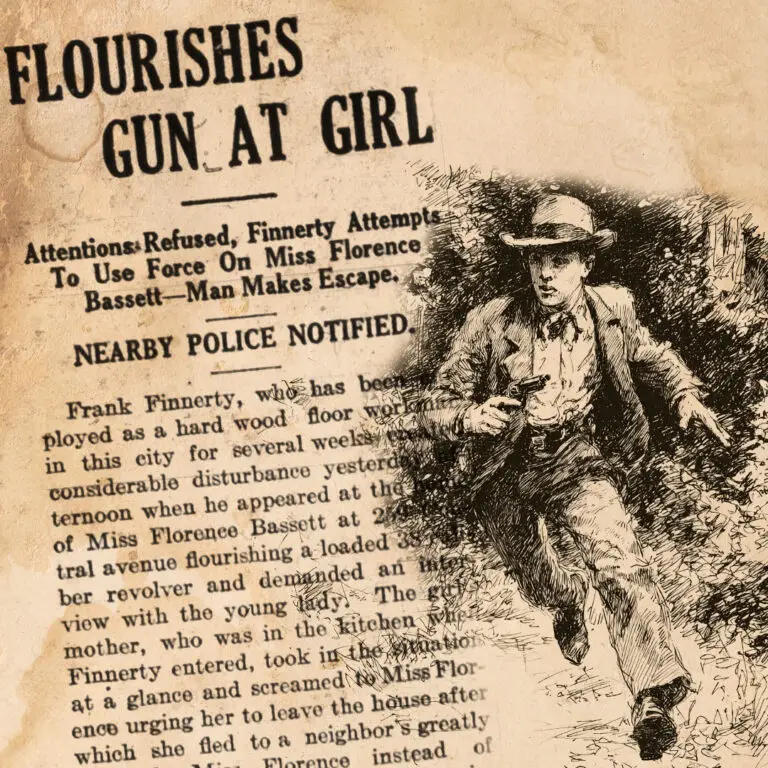
May 9, 1915: Frank Finnerty had been “keeping company” with Florence Bassett for nearly two years, but their relationship was about to take a terrifying turn. In this first installment of a three-part series, Anthony McManus reveals the disturbing story of a hardwood floor worker whose romantic desperation led him to break into Florence’s Central Avenue home through a basement window, “flourishing a loaded revolver and demanding an interview with the young lady.” When Florence’s mother “took in the situation at a glance” and both women fled, Finnerty’s pursuit launched a citywide manhunt that would expose dark secrets about their relationship. What drove a man to purchase a gun claiming he wanted to “shoot some ducks” only to terrorize the woman he claimed to love? McManus reconstructs the events of that frightening afternoon, from the panicked emergency call that lacked crucial details to Finnerty’s mysterious disappearance into “Watson’s Woods.” It’s a compelling exploration of obsession and violence in early 20th-century Dover, where a two-year courtship would end in broken windows, discarded weapons, and a woman forced to hide from someone she once trusted.

When Love Turns Dangerous

When Love Turns Dangerous: The Frank Finnerty Affair (Part 2)

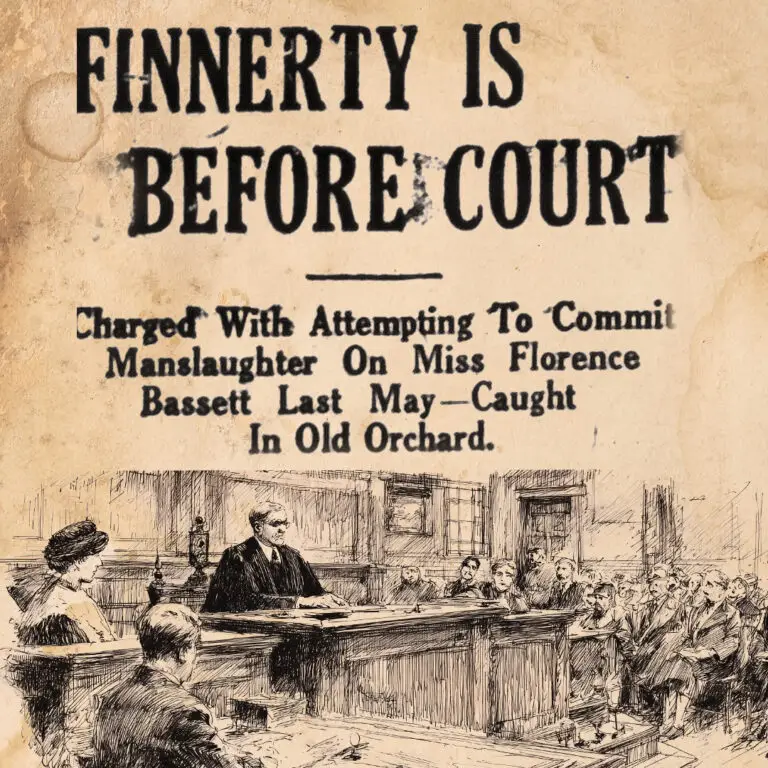
Three months after terrorizing Florence Bassett, Frank Finnerty finally faces justice—and the full truth of their twisted relationship emerges. In this second installment, Anthony McManus takes us inside the Dover District Court where ex-judge James McCabe defends a man whose romantic obsession had escalated far beyond anyone imagined. Florence’s testimony reveals the disturbing reality behind their “courtship”: forced car rides to Portsmouth, stolen pocketbooks to prevent escape, and physical abuse that left bruises on her arms. But the most shocking revelation comes from an unexpected witness—Finnerty’s own mother, who drops a bombshell that changes everything we thought we knew about this case. Meanwhile, Deputy Sheriff Fred Goodwin’s dramatic arrest of Finnerty at Old Orchard Beach sparks a public feud between law enforcement agencies over who deserves credit for capturing the fugitive. McManus expertly reconstructs the courtroom drama where love letters become evidence, character witnesses backfire spectacularly, and a gun purchase for “duck hunting” reveals the true intent behind Finnerty’s desperate actions.

When Love Turns Dangerous

When Love Turns Dangerous: The Frank Finnerty Affair (Part 3)

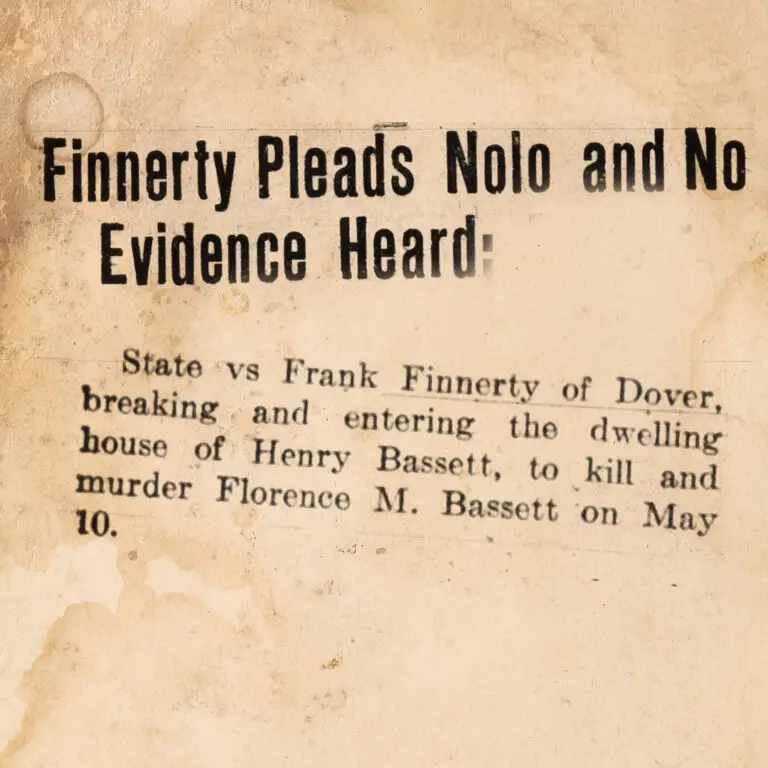
Justice arrives swiftly, but questions linger about what really happened between Frank Finnerty and Florence Bassett. In this concluding installment, Anthony McManus follows Finnerty’s case to Superior Court, where his plea change from “not guilty” to “no contest” raises intriguing questions about the true nature of his crimes. With a sentence of one to three years in state prison, Finnerty disappears from Dover’s story, but McManus examines the puzzling aspects of this case that don’t quite add up. Why would a man who had been “keeping company” with Florence for two years choose to break into her home through a basement window rather than simply knock on the front door? How did he manage to terrorize the household without ever actually encountering his target? And most mysteriously, did the Bassett family really remain unaware of the shocking secret revealed by Finnerty’s mother throughout their entire two-year relationship? McManus explores these lingering questions while revealing how law enforcement feuds and legal maneuvering shaped the final outcome of a case that highlighted the limited protections available to women facing dangerous obsessions in 1915 Dover.

One Busy Friday

One Busy Friday: A Day of Crime and Change (Part 1)

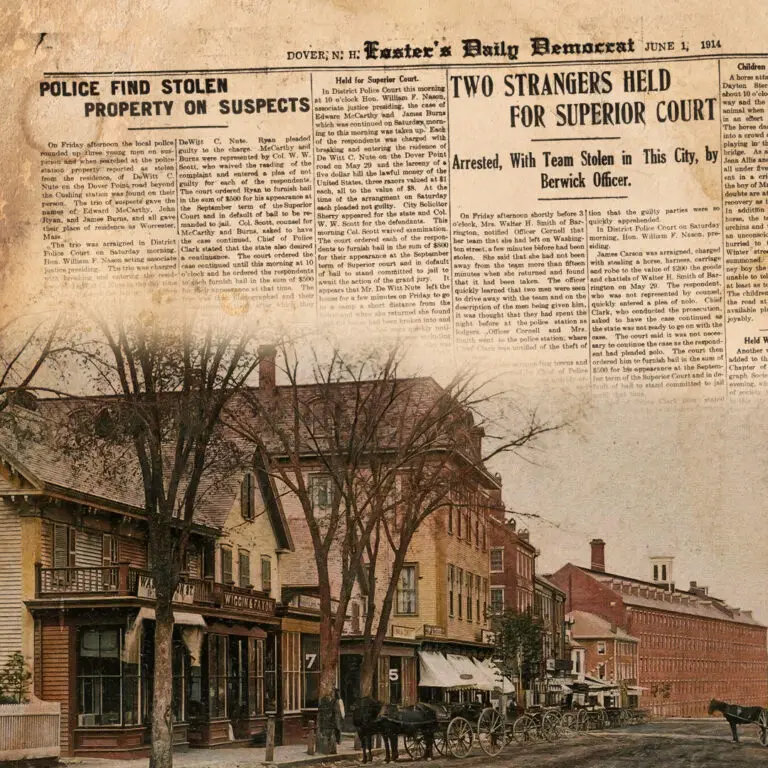
May 29, 1914, was shaping up to be just another quiet Friday in Dover until the calls started pouring in. First, a break-in at DeWitt C. Nute’s home on Dover Point Road—missing items worth just eight dollars but enough to set three Worcester, Mass. men on a collision course with justice. Then Mrs. Walter H. Smith discovered her horse and wagon had vanished from Washington Street, launching a high-speed automobile chase that would stretch from Dover to the Maine border. In this first installment of a three-part series, Anthony McManus reveals how one eventful day exposed the fascinating intersection of old and new in early 20th-century Dover, where horse thieves still operated alongside automobile pursuits, the police station doubled as a homeless shelter, and career criminals like James Carson carried decades of secrets. Don’t miss this glimpse into a Dover caught between the horse-and-buggy era and the modern age, where a simple day of petty crime would reveal much larger stories about justice, identity, and the changing face of law enforcement.

One Busy Friday

One Busy Friday: A Day of Crime and Change (Part 2)

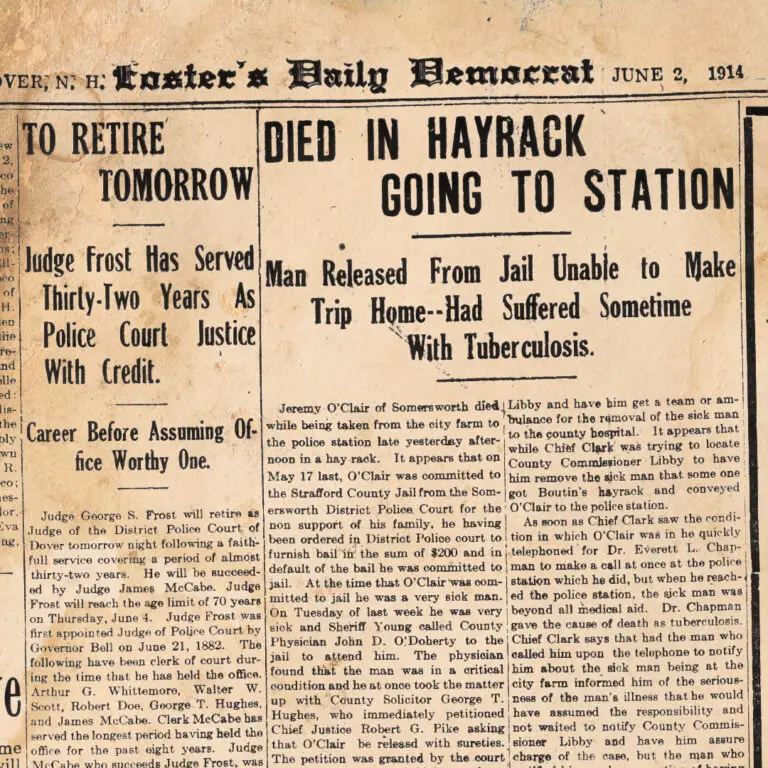
As Dover’s criminals face justice, the city’s legal system undergoes its own transformation. In this second installment, Anthony McManus reveals the end of an era as Judge George Seward Frost prepares to step down after 31 years on the bench, making way for his longtime clerk James McCabe to inherit a changing courtroom. But McManus also exposes a darker side of Dover’s justice system through the tragic case of Jeremy O’Clair, whose inability to support his family led to a jail sentence that became a death sentence. Released from the County Farm with just 25 cents for streetcar fare, O’Clair collapsed on his journey home and died alone, highlighting the system’s failures even when officials acted with good intentions. As Dover’s police round up career criminals and chase horse thieves with automobiles, the human cost of an imperfect justice system becomes painfully clear. Don’t miss this sobering look at how Dover’s courts evolved during a pivotal moment when the city was caught between old ways and new realities.

One Busy Friday

One Busy Friday: A Day of Crime and Change (Part 3)

Justice finally catches up with Dover’s criminals, but nothing is quite what it seems. In this concluding installment, Anthony McManus follows James Carson and his co-conspirators as their cases reach Superior Court, revealing a web of false identities that would make modern investigators dizzy. Carson’s horse theft conviction brings a 5-to-7-year sentence, but his mysterious companion James Connors vanishes from the record entirely—was he an accomplice or something far more intriguing? Meanwhile, the trio who burglarized DeWitt Nute’s home turn out to be Wallace Crosby, Leslie Bogart, and someone named Macaione, not the Worcester men they claimed to be. McManus unravels the question of who these people really were and why they descended on Dover that fateful Friday. Was Connors actually an undercover operative tracking career criminals? Why did the court records show a bail order for someone named Leo Sheldon who appears nowhere else in the case? Don’t miss this satisfying conclusion that proves truth can be stranger than fiction, even in Dover’s seemingly simple criminal cases.

Patrick Morgan

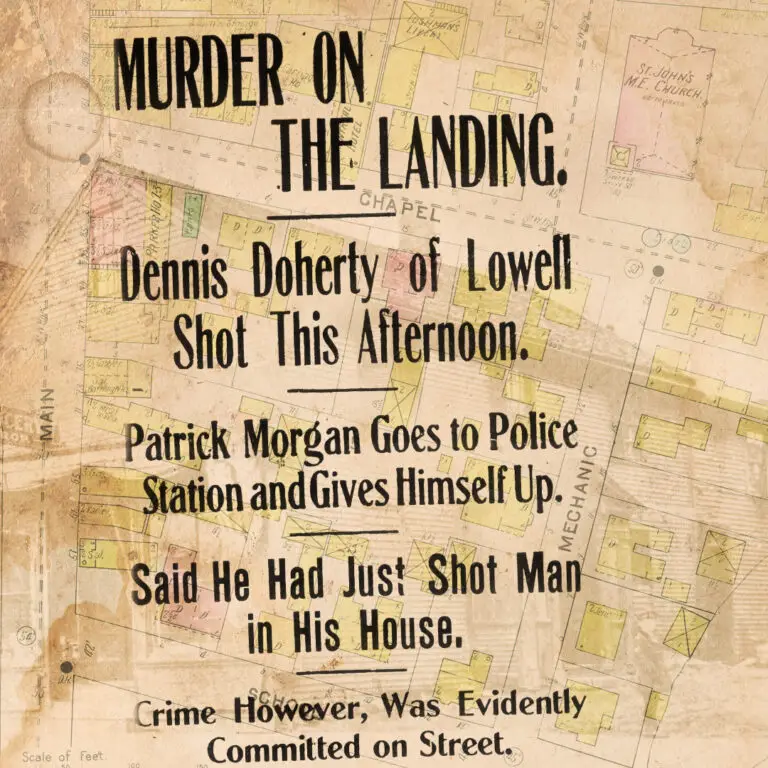
Murder on the Landing: The Patrick Morgan Case (Part 1)

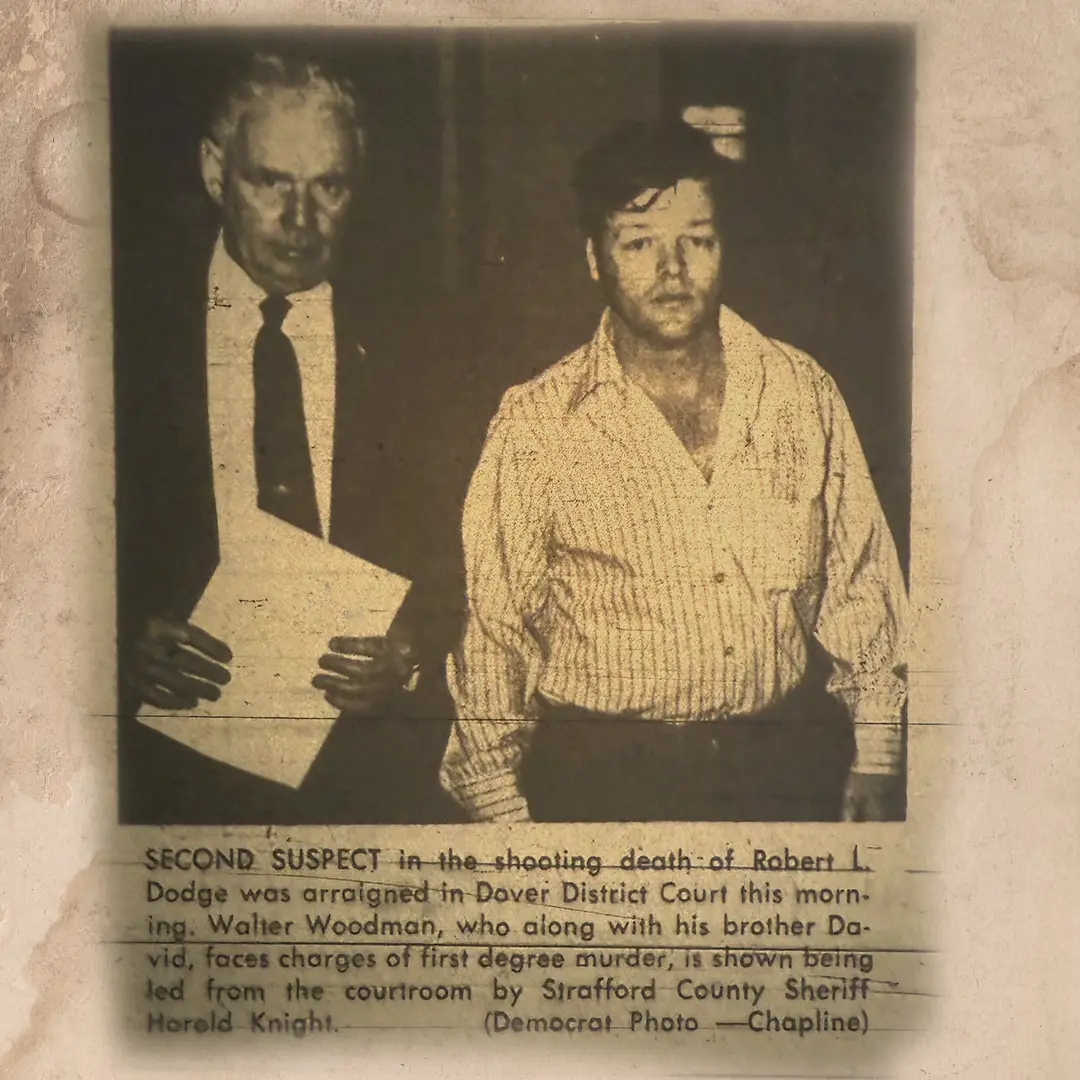
February 23, 1907: A man bursts into Dover Police Station waving a cocked revolver and exclaims he’s just shot someone on Main Street. In this first installment of a two-part series, Anthony McManus reveals the shocking case of Patrick Morgan, whose claim of self-defense quickly unraveled when witnesses came forward with a very different version of events. What began as Morgan’s assertion that Dennis Doherty “came into the house and was running things so that I could not stand it any longer” transformed into something far more sinister when Officer Dickey reported seeing the shooting take place on the sidewalk, not inside any house. McManus reconstructs the tragic confrontation between the 25-year-old Dover resident and the Lowell machinist who had been helping the intoxicated Morgan home. With a $1.50 revolver purchased just hours before the shooting, bloodstains in the snow, and Morgan “acting rather queerly” in his cell while making odd noises, this case would challenge Dover’s justice system to determine whether they were dealing with murder or madness.

Patrick Morgan

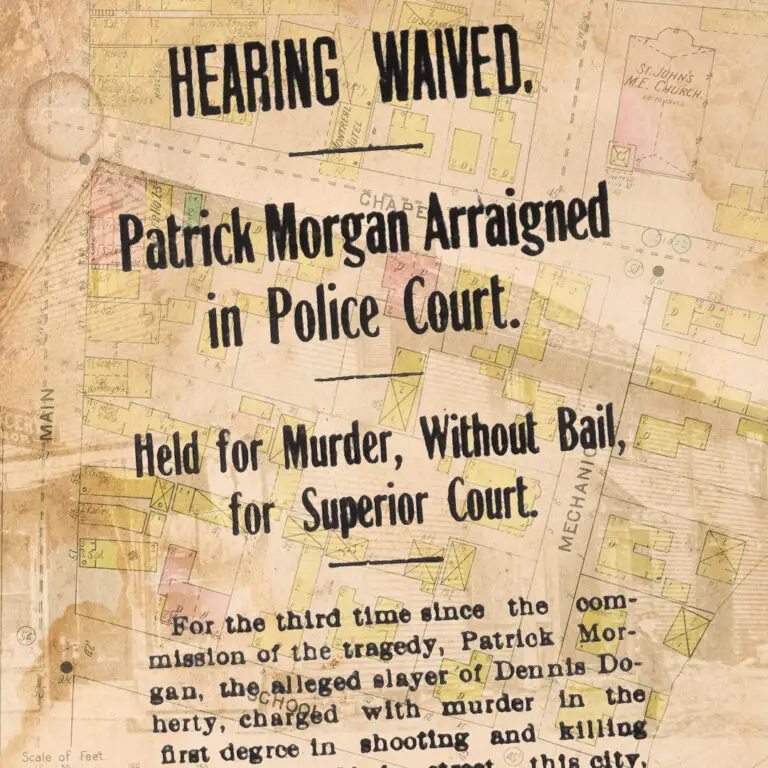
Murder on the Landing: The Patrick Morgan Case (Part 2)

Justice takes an unexpected turn as Patrick Morgan’s murder case becomes a question of mental competency rather than guilt or innocence. In this concluding installment, Anthony McManus follows Morgan through a justice system grappling with a defendant who greets his attorney “with a smile and the nod of the head” despite facing murder charges. When defense counsel waives the preliminary hearing and files for an insanity plea, the case shifts from Dover’s courtroom to the New Hampshire State Hospital for the Insane, where Superintendent C.P. Bancroft must determine Morgan’s mental state. The resulting evaluation paints a disturbing portrait of “chronic dementia grafted on an original condition of congenital weakmindedness,” leaving authorities to wrestle with questions that remain relevant today: How does society handle those who commit violent acts but may not be responsible for their actions? McManus reveals the final disposition of this troubling case while exploring the early 20th century’s approach to mental health and criminal responsibility, showing how one tragic afternoon forever changed multiple lives in Dover’s close-knit community.

Frost, Judge

Under Judge Frost's Gavel: Colorful Characters in Dover's Courts

Step into Dover’s turn-of-the-century courtroom where Judge George Seward Frost presided over a daily parade of memorable characters and minor mayhem. In this fascinating glimpse behind the scenes of Dover’s justice system, Anthony McManus reveals the colorful world of everyday crime when a city of 12,000 supported over 30 saloons and “walking the beat” officers encountered everyone from “old-time baseball player” Jack Tyman, who sold his clothes for “drink money,” to the trio caught having a “rum picnic instead of attending church.” Meet Israel Jandreault, who chose to pay his fine rather than attend “Superintendent Handy’s Agricultural College” (the County Farm), and Joseph McTighe, who “took leg bail” from jail and disappeared into Dover lore. McManus paints a vivid portrait of Judge Frost himself, the Harvard-educated Durham native who walked from his Locust Street home to preside over 31 years of Dover’s most entertaining minor crimes, while Foster’s kept the public informed with wonderfully colorful language that brings these forgotten characters back to life.

Bean and Mathes

When Trust Turns Deadly: Another Chapter About Money, Violence, and Betrayal (Part 1)

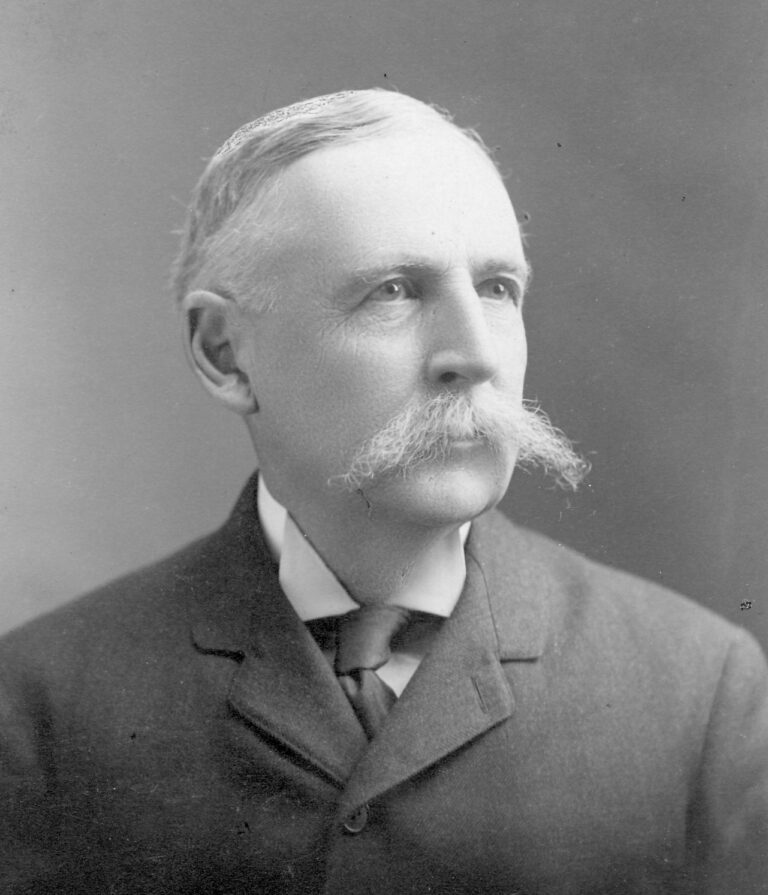
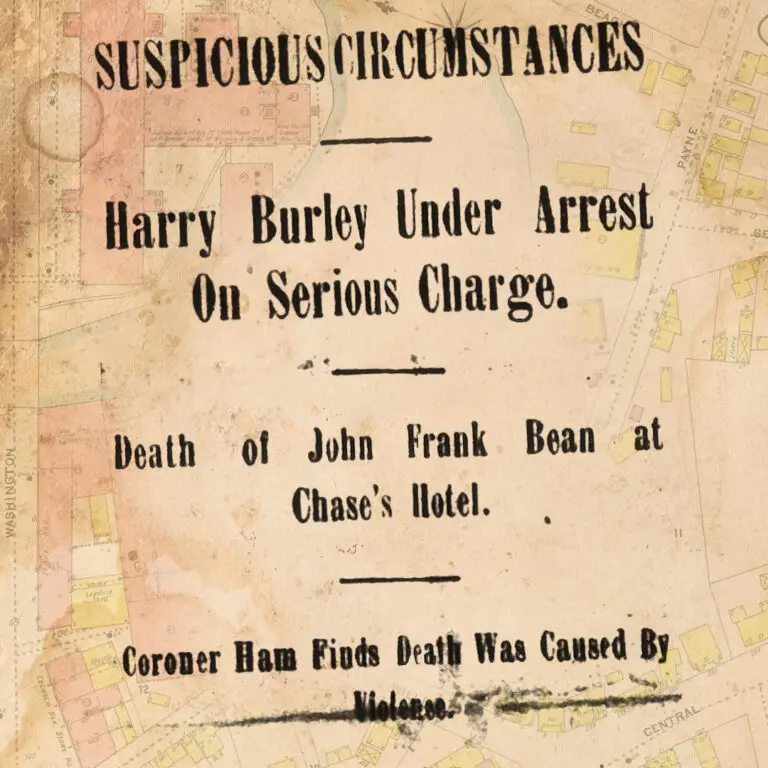
Dover’s dark financial saga continues with two more shocking tales that rocked the community at the turn of the century. In this first installment of a three-part series continuing our exploration of Dover’s embezzlement crisis, Anthony McManus reveals the deadly confrontation between John Frank Bean and Harry Burley that began with a simple hat swap at Newhall’s saloon and ended with a fatal blow at Chase’s Hotel. When the 60-year-old shoemaker from Ossipee agreed to trade hats with Burley after sharing drinks on Locust Street, neither man could have imagined the tragic chain of events that would follow. A headbutt to the stomach, a previous rupture, and a night of agony would transform a barroom disagreement into Dover’s courtrooms. But this is only half the story. McManus also introduces us to Albert O. Mathes, another trusted bank employee who betrayed the community’s faith. Following Isaac Abbott’s suicide and Harry Hough’s genteel surrender, Mathes’s case would close the chapter on Dover’s unwelcome reputation as New Hampshire’s embezzlement capital, but not before a train accident and insurance settlement added unexpected twists to this tale of financial betrayal.

Albert Mathes

When Trust Turns Deadly: Another Chapter About Money, Violence, and Betrayal (Part 2)

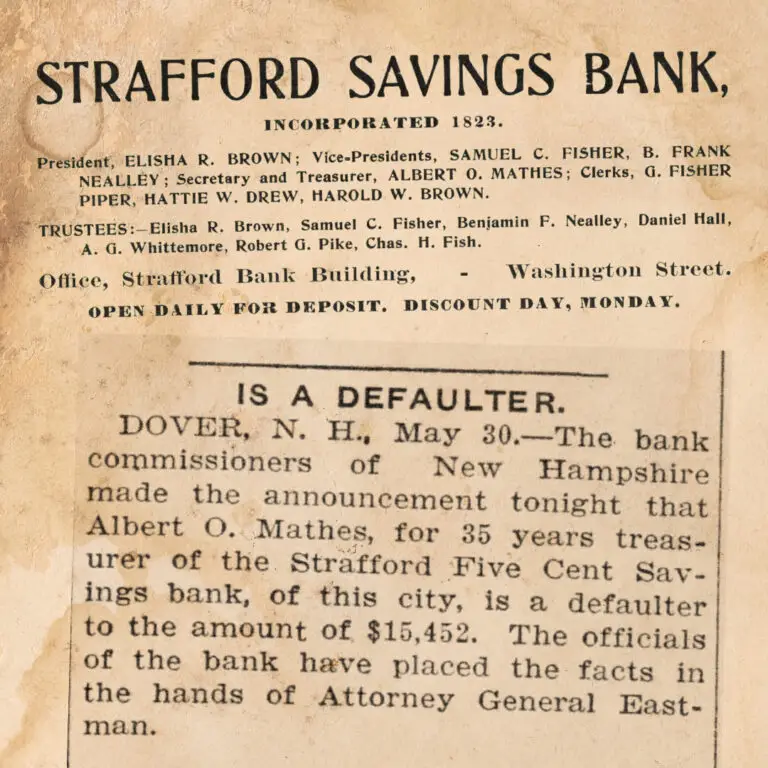
Another banking scandal unfolds as Albert O. Mathes completes the trio of trusted employees who destroyed their community’s faith. In this second installment, continuing our exploration of Dover’s embezzlement crisis that began with Isaac Abbott and Harry Hough, Anthony McManus reveals how the respected treasurer of Strafford Bank became the last chapter in Dover’s unwelcome reputation as New Hampshire’s embezzlement capital. Unlike Abbott’s tragic suicide or Hough’s genteel surrender, Mathes’s story takes an unexpected turn when a legitimate train accident results in the amputation of his leg and a convenient insurance settlement. When bank examiners arrive in 1903 to investigate depositor complaints, they uncover 13 years of “borrowing” that began with bad investments and spiraled into systematic theft. But McManus also explores the fascinating network of support surrounding Mathes, from his brother-in-law Amos Roberts to “Ham the Hatter” John T.W. Ham, revealing how Dover’s respected citizens rallied around one of their own even in disgrace. Don’t miss this penultimate chapter that shows how Dover’s final embezzlement case differed dramatically from its predecessors, setting the stage for a conclusion that would finally close the book on the city’s darkest financial period.

Albert Mathes

When Trust Turns Deadly: Another Chapter About Money, Violence, and Betrayal (Part 3)

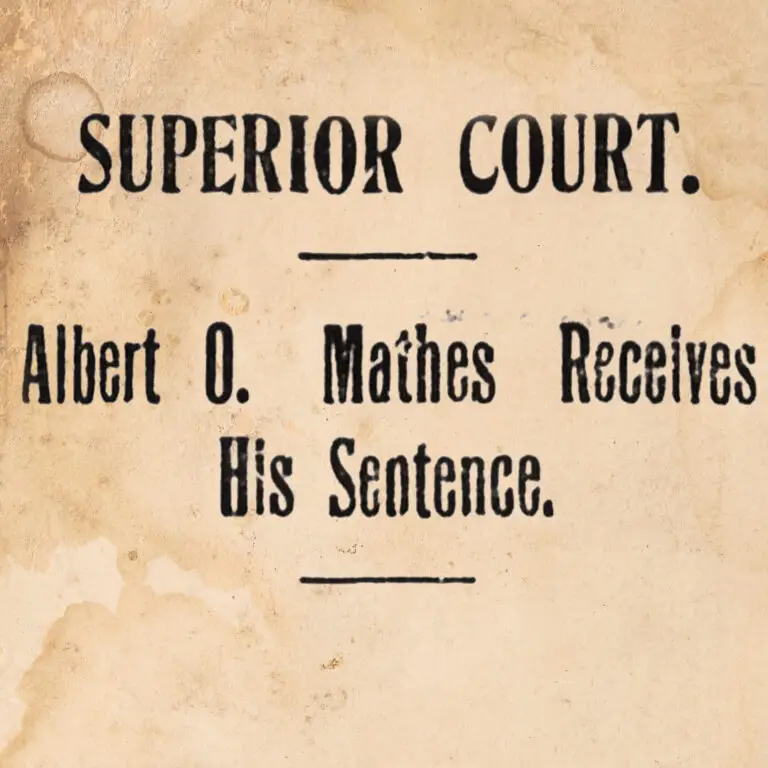
Justice and redemption close the final chapter of Dover’s embezzlement era in this concluding installment that completes the saga begun with Isaac Abbott and Harry Hough. In Part 3, Anthony McManus reveals Albert O. Mathes’s dramatic day in court, where his plea of guilt “in a clear tone of voice which could be distinctly heard in all sections of the room” brings Dover’s banking scandals to their end. With his attorney pleading for mercy due to Mathes’s amputation and poor health, and the revelation that his 86-year-old mother still doesn’t know the truth about her son’s crimes, the courtroom becomes a stage for one of Dover’s most poignant legal moments. Unlike the bank failures that followed Abbott’s suicide and Hough’s theft, Strafford Bank survives Mathes’s betrayal. McManus follows Mathes through his prison term and unexpected return to Dover society, and a telling omission from his 1907 obituary. Don’t miss this powerful conclusion that shows how Dover’s final embezzlement case differed from its predecessors and finally closed the book on the city’s darkest financial period, restoring both justice and the community’s faith in its institutions.

July 4 murders

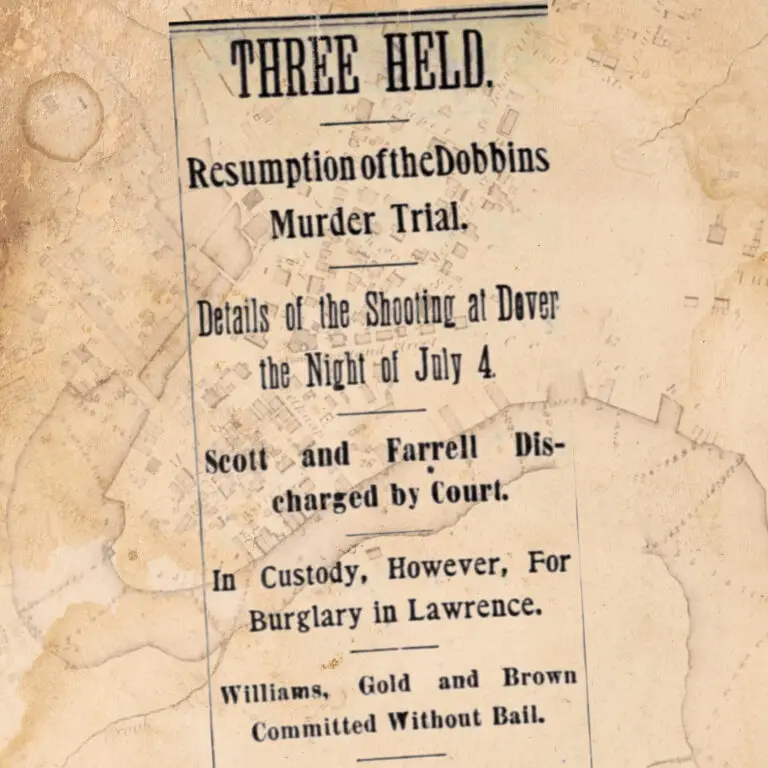
"Paint the Town Red": Dover's Deadliest Independence Day (Part 1)

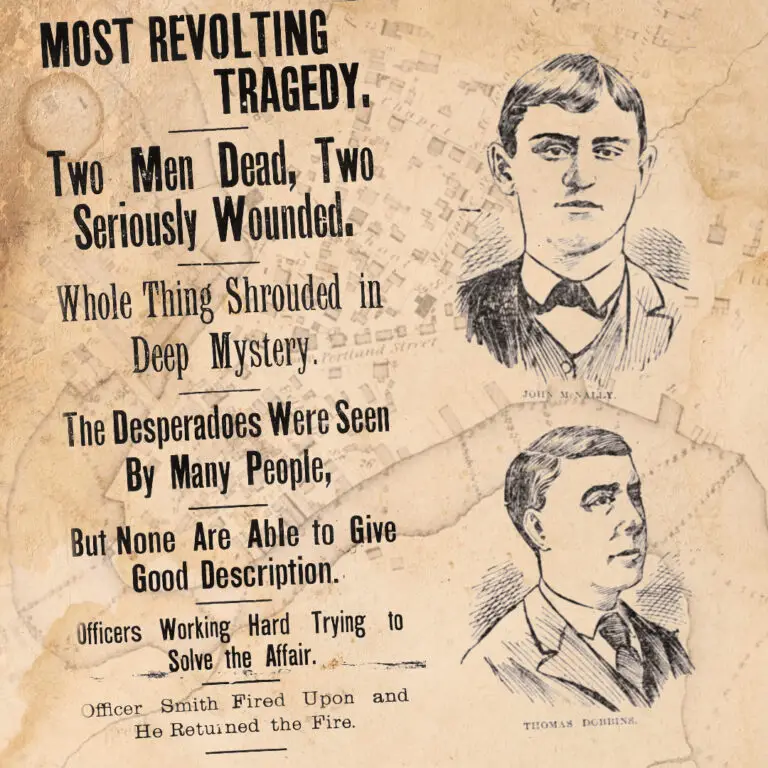
July 4, 1900: While neighboring Somersworth enjoyed a quiet holiday, Dover’s Independence Day erupted into what newspapers called “The Most Revolting Tragedy.” Five out-of-town strangers arrived with guns, plenty of money, and a thirst for trouble that would transform Dover’s peaceful streets into a battlefield. In this first installment of a six-part series, Anthony McManus reveals how a barroom encounter on Third Street escalated into a reign of terror that left innocent citizens shot in the streets and the entire community gripped by fear. When Daniel Sullivan and his companions declined the strangers’ invitation for “target practice” along the railroad tracks, they thought the trouble was over. They were wrong. By the next evening, gunshots would ring out on Main Street, blood would stain the sidewalks, and Dover’s police would find themselves outgunned by men who seemed determined to “paint the city red.” Don’t miss this extraordinary true crime saga that reads like a Wild West movie script, except it all happened right here in Dover’s downtown.

July 4 murders

"Paint the Town Red": Dover's Deadliest Independence Day (Part 2)

The manhunt begins as Dover awakens to a community under siege. In this second installment, Anthony McManus follows the desperate search for the five armed “desperadoes” who turned Main Street into a battlefield, leaving multiple victims bleeding in the streets and Officer William Smith dodging bullets in the line of duty. With Arthur Russell fighting for his leg after surgery, Thomas Dobbins clinging to life, and the community in terror, law enforcement launches an unprecedented investigation. From the gun shop on Central Avenue where ammunition was refused to the frightened residents asking police to search their homes for hiding gunmen, Dover mobilizes like never before. Witness statements pour in as authorities piece together the movements of the mysterious strangers, the encounters at Wesley House, the connections to the Salmon Falls Hotel, and the trail that leads to a quarry crew “out for a good time.” But as McManus reveals, separating truth from rumor proves challenging when “every man that was met on the street was held up” and suspicious characters are questioned throughout the region.

July 4 murders

"Paint the Town Red": Dover's Deadliest Independence Day (Part 3)

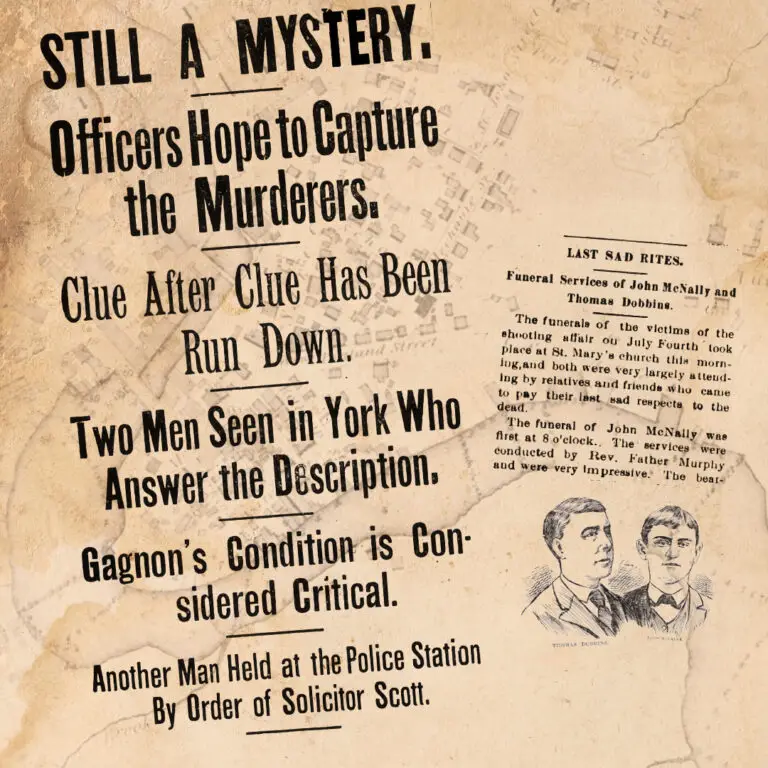
The net closes in as Dover’s “desperadoes” are finally cornered. In this third installment, Anthony McManus delivers the dramatic capture that ended the community’s terror, from Officer Young hanging onto John Farrell “like grim death” as he tried to escape through a window at the Waverly House, to Frank Gold discovered hiding beneath a stable and coaxed to surrender under threat of physical harm. With Thomas Dobbins now dead and the community demanding justice, witness identifications pour in as the captured men face a packed courtroom for their arraignment. But McManus also takes us behind the scenes to explore Dover’s unique “revolver” jail, the revolutionary rotating cell design that was supposed to be escape-proof. When Kitty Scanlon comes face-to-face with John Williams and both turn “deathly pale,” the case seems solved. Yet questions linger about the mysterious jewelry and stamps found on John Brown, suggesting these men might be more than simple quarry workers “out for a good time.” Don’t miss this pivotal chapter as Dover’s most sensational criminal case moves from manhunt to courtroom drama, with the community finally getting its first glimpse of the men who terrorized their streets.

July 4 murders

"Paint the Town Red": Dover's Deadliest Independence Day (Part 4)

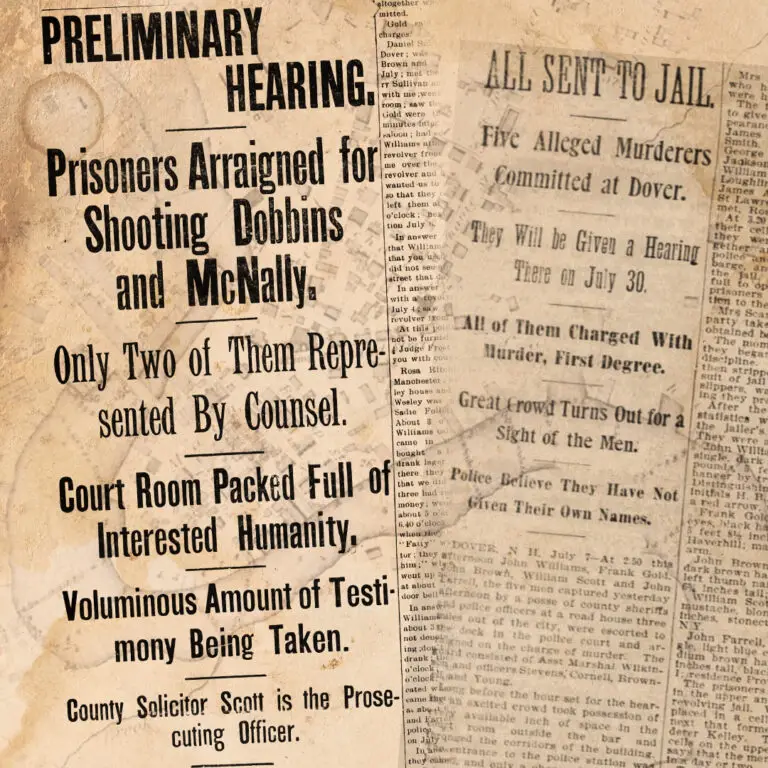
The courthouse erupts as Dover’s most sensational trial begins with a “great rush to obtain an entrance” and police fearing someone would be injured in the struggle for seats. In this fourth installment, Anthony McManus takes us inside the packed courtroom where the “desperadoes” finally face justice for their reign of terror. Witness after witness takes the stand, from Daniel Sullivan recounting the Third Street assault to Samuel Jackson’s shocking testimony about overheard plans to “clean out” the Wesley House and exchange blanks for live ammunition. The drama intensifies when Kitty Scanlon and Ida Donahue describe the fatal confrontation at 14 Young St., while Officer Smith reveals his deadly shootout with John Williams in the streets. But as McManus reveals, the preliminary hearing takes an unexpected turn when Judge Frost makes the puzzling statement that he “can only hold three men,” leading to surprising releases and new arrests. Don’t miss this courtroom chapter where eyewitness accounts bring the violence vividly to life, and Dover’s 1900 Main Street, with its ten groceries and three saloons, provides the backdrop for one of the city’s most dramatic legal proceedings.

July 4 murders

"Paint the Town Red": Dover's Deadliest Independence Day (Part 5)

Justice takes a surprising turn as the “desperadoes” find themselves facing charges far from Dover’s streets. In this fifth installment, Anthony McManus reveals the shocking twist that transformed freed men into fugitives when Lawrence, Mass. police arrive to arrest William Scott and John Farrell for a brewery burglary committed just days before their Dover rampage. What seemed like liberty becomes a new nightmare as the men face charges of safe-cracking, armed robbery, and terrorizing a night watchman who was bound and gagged. The courtroom drama intensifies when Scott’s decision to shave his mustache “causes several witnesses to become somewhat mixed in their identifications,” frustrating Massachusetts officials who didn’t appreciate the prisoner’s grooming choices. As McManus expertly weaves together the parallel cases, we discover how Dover’s “desperadoes” may have been part of a larger criminal enterprise stretching across New England. Don’t miss this penultimate chapter that exposes the complex web of crime connecting Dover’s deadly Fourth of July to a multi-state spree of violence and theft, proving these men were far more dangerous than anyone initially imagined.

July 4 murders

"Paint the Town Red": Dover's Deadliest Independence Day (Part 6)

The final verdict arrives as Dover’s deadliest Independence Day case reaches its dramatic conclusion. In this sixth and final installment, Anthony McManus brings us inside the courtroom for the climactic trial that will determine the fate of John Williams, Frank Gold, and John Brown. After months of investigation, preliminary hearings, and shocking revelations about multi-state crime sprees, a jury of Dover’s peers must decide who will pay for the blood spilled on Main Street. With familiar faces taking the stand one final time, from Daniel Sullivan to Officer Smith, the prosecution builds its case while defense attorney John Kivel mounts his final defense. But as McManus reveals, the swift justice system of 1900 moves at a pace that would astound modern observers, and the ultimate resolution proves both surprising and troubling. What happens when a case that began with five “desperadoes” terrorizing Dover’s streets ends with an outcome that leaves more questions than answers? Don’t miss this compelling conclusion to one of Dover’s most extraordinary criminal sagas, where justice proves as unpredictable as the crimes themselves, and the fate of the remaining suspects vanishes into history’s shadows.

Isaac Abbott

Betrayal Behind the Counter: Dover's Dark Days as New Hampshire's Embezzlement Capital (Part 1)

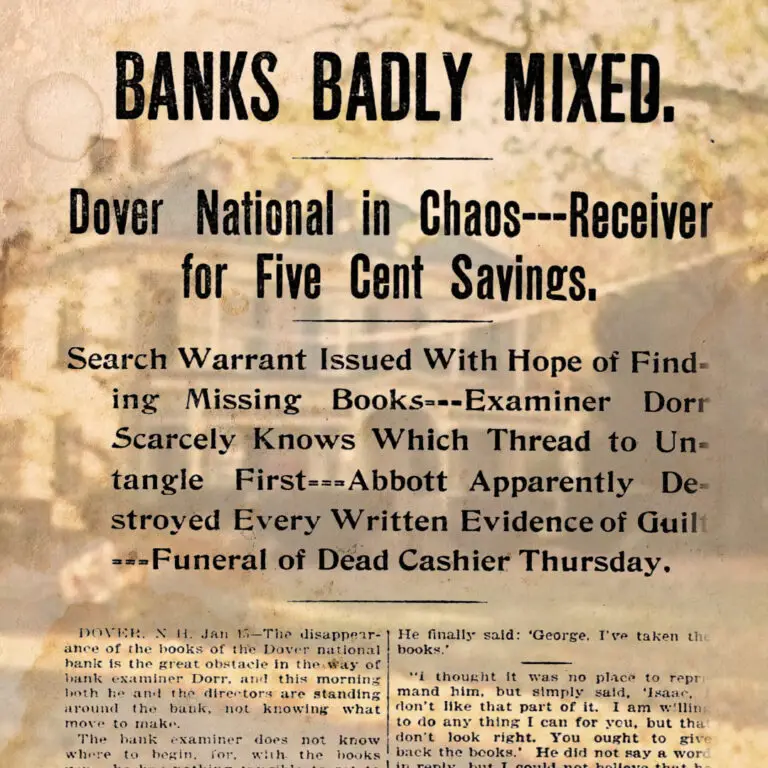
From 1895 to 1903, Dover earned an unwelcome distinction as New Hampshire’s embezzlement capital when three trusted bank employees decided to help themselves to the money close at hand. In this first installment of a three-part series, Anthony McManus reveals the shocking story of Isaac Abbott, Dover National Bank’s respected cashier and city treasurer, whose elegant home on Arch Street raised whispers about how a bank employee could afford such luxury. When federal bank examiners arrived on Jan. 11, 1895, for what should have been a routine review, they discovered discrepancies that would rock Dover’s financial community. Abbott promised to explain everything on Monday morning, but when U.S. Marshals arrived at his Arch Street residence to arrest him, they were met with the sound of a gunshot from the upper floor. The full story reveals a complex tale of trust betrayed, a city’s finances frozen, and a community grappling with the shocking reality that their most respected citizens weren’t always who they seemed.

Harry Hough

Betrayal Behind the Counter: Dover's Dark Days as New Hampshire's Embezzlement Capital (Part 2)

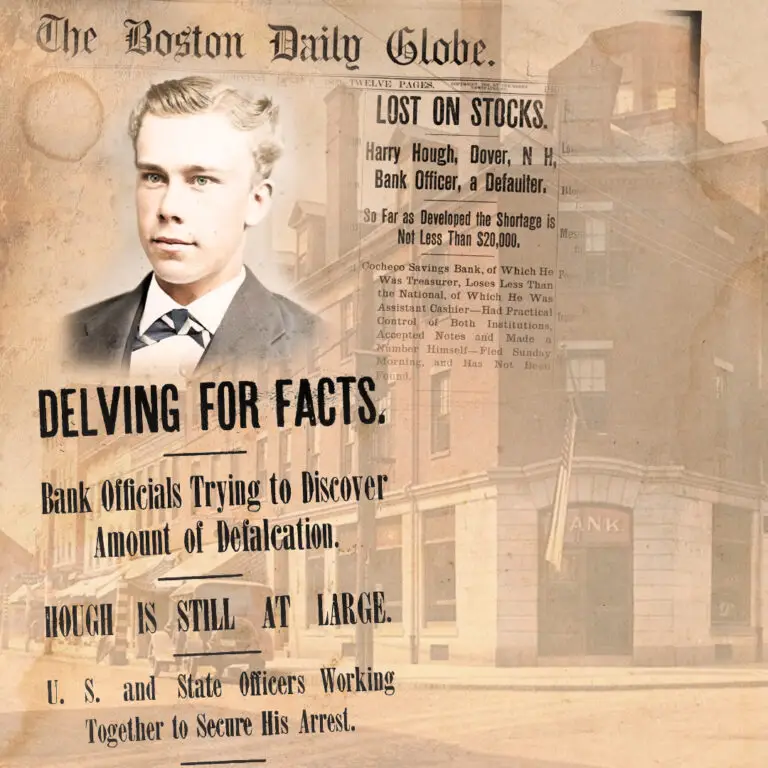
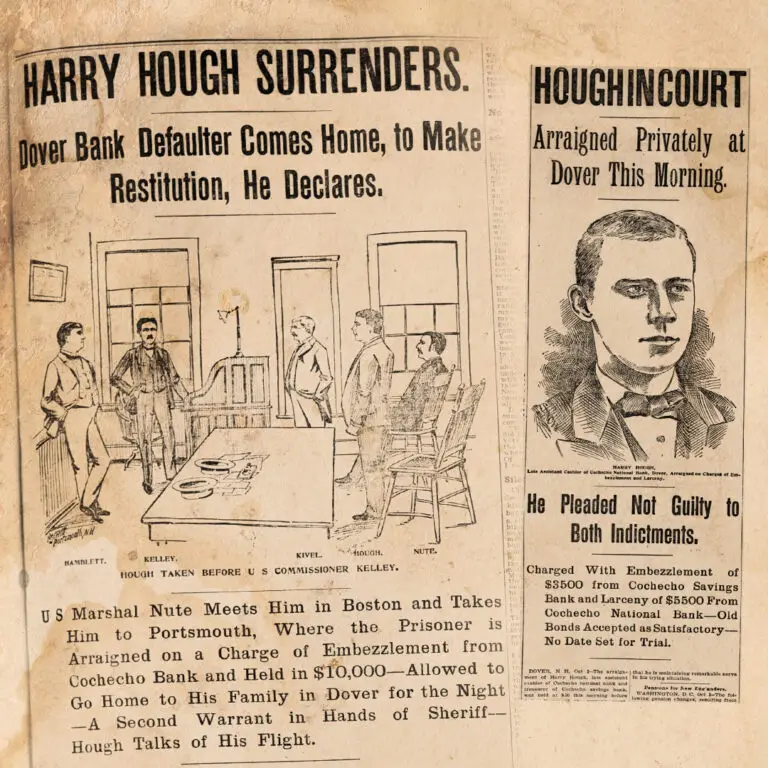
Just four years after Isaac Abbott’s tragic end rocked Dover’s banking world, another trusted employee decided to help himself to the funds. In this second installment, Anthony McManus reveals the brazen story of Harry Hough, assistant cashier at Cocheco Savings Bank, who calmly boarded the 6:30 a.m. train to Boston on a Sunday morning in June 1899, with $3,500 in stolen cash. But this wasn’t Abbott’s desperate finale; Hough had a different plan entirely. After a leisurely two-week vacation touring Baltimore, Delaware, and New York City, he orchestrated his own surrender with the help of Attorney John Kivel, dining comfortably at Portsmouth’s Kearsarge House while giving interviews to reporters. What emerges is a fascinating portrait of Dover’s “Good-Old-Boys Network” in action, where family connections, community standing, and careful maneuvering could transform a bank-destroying crime into something almost resembling a gentleman’s agreement. Don’t miss this exploration of how Dover’s elite protected their own, even when the evidence of betrayal was undeniable.

Harry Hough

Betrayal Behind the Counter: Dover's Dark Days as New Hampshire's Embezzlement Capital (Part 3)

Harry Hough’s story reaches its surprising conclusion as Dover’s justice system proves that connections matter more than crimes. In this final installment of the banking scandal trilogy, Anthony McManus reveals how Hough’s well-connected family and friends, including bank director father Ralph Hough and influential figures like Harrison Haley and James Lothrop, orchestrated a remarkably lenient outcome for a man who destroyed a bank. From his comfortable accommodations with a U.S. Marshal to his clever train station escape from crowds, Hough’s case demonstrates the power of Dover’s elite network. But as McManus details Hough’s eventual federal sentencing, comfortable return to Dover society, and respectable obituary that omitted any mention of his criminal past, a troubling pattern emerges. With Isaac Abbott’s suicide and Harry Hough’s gentle treatment, Dover was left with just one remaining bank: The Strafford Bank. As McManus ominously notes, this “virtual monopoly” offered “no immunity from the bad conduct of a trusted employee.” The conclusion of this series sets the stage for yet another shocking betrayal that would complete Dover’s unfortunate trilogy of banking disasters. Stay tuned for the final chapter in Dover’s embezzlement saga.

William Hanna

The Burglar Who Wouldn't Quit: The William Hanna Saga (Part 1)

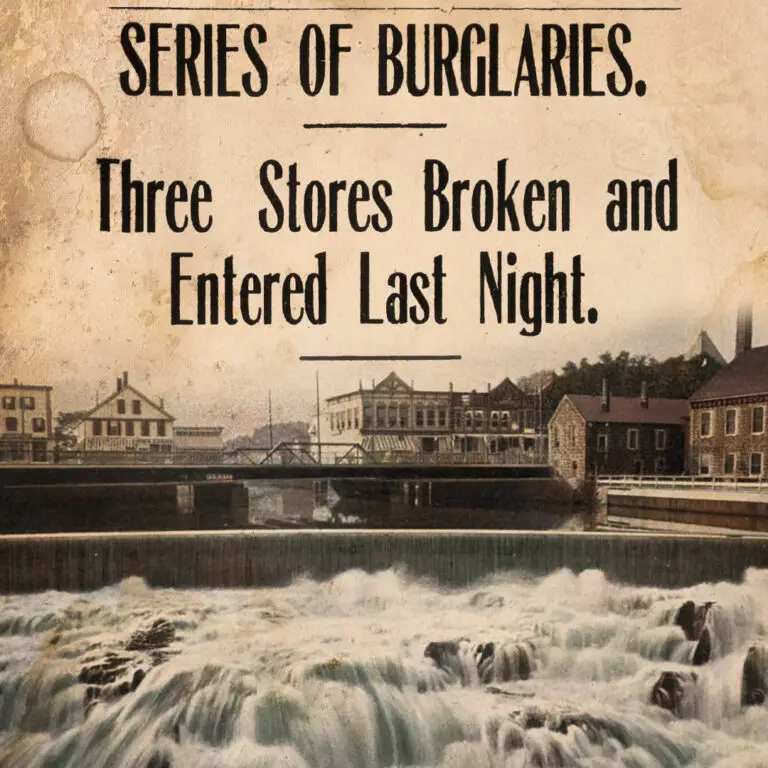
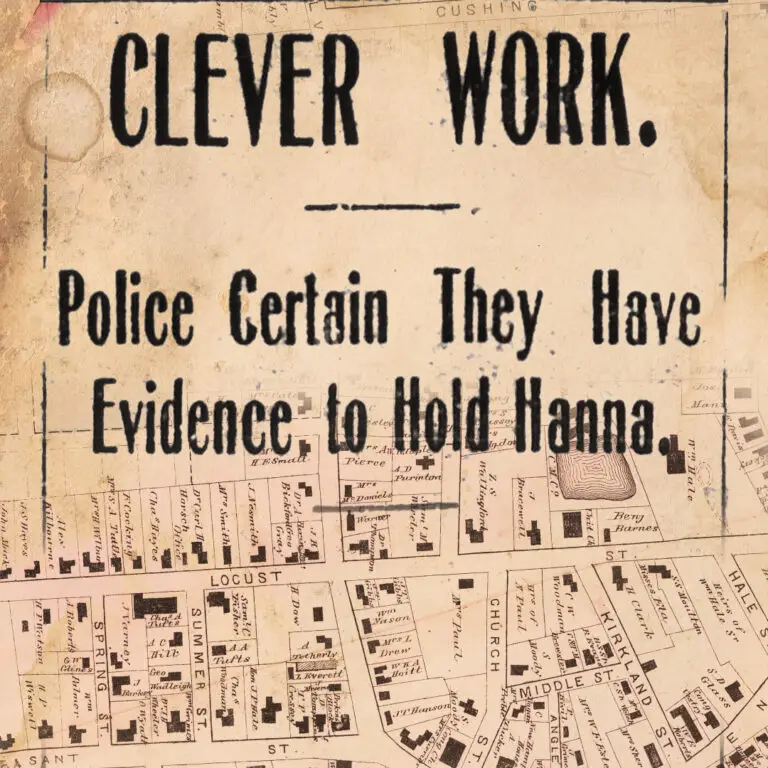
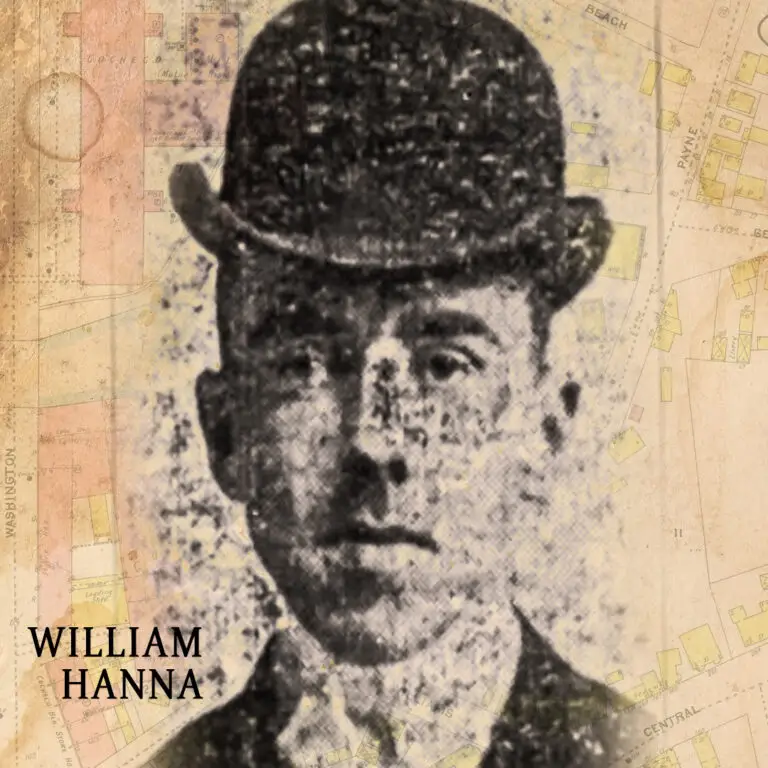
November 1905: Dover awakens to “the boldest burglaries committed in this section for a long time.” Three businesses targeted in a single night: Dover Bottling Company, Fred Foss’s store, and Thomas Hughes’ meat market, where $26 disappeared from a desk drawer. The only clue? A bloody handkerchief left behind. When police appear at the rented room of William Hanna, a mysterious drifter who’s been “stopping in Dover for the past few weeks,” they find him still in bed. In this first installment of an extraordinary seven-part series, Anthony McManus unravels the complex web of criminal activity that points to Hanna and his companion, the elusive “young man” seen with him the previous evening. With suspicious silver coins already traced to a local pool hall and authorities connecting Hanna to the “bold highway robbery” of Miss Annie Arno on Littleworth Road, the stage is set for one of Dover’s most persistent criminal cases—one that will involve shocking jailbreaks, clever detective work, and unexpected twists of justice.

William Hanna

The Burglar Who Wouldn't Quit: The William Hanna Saga (Part 2)

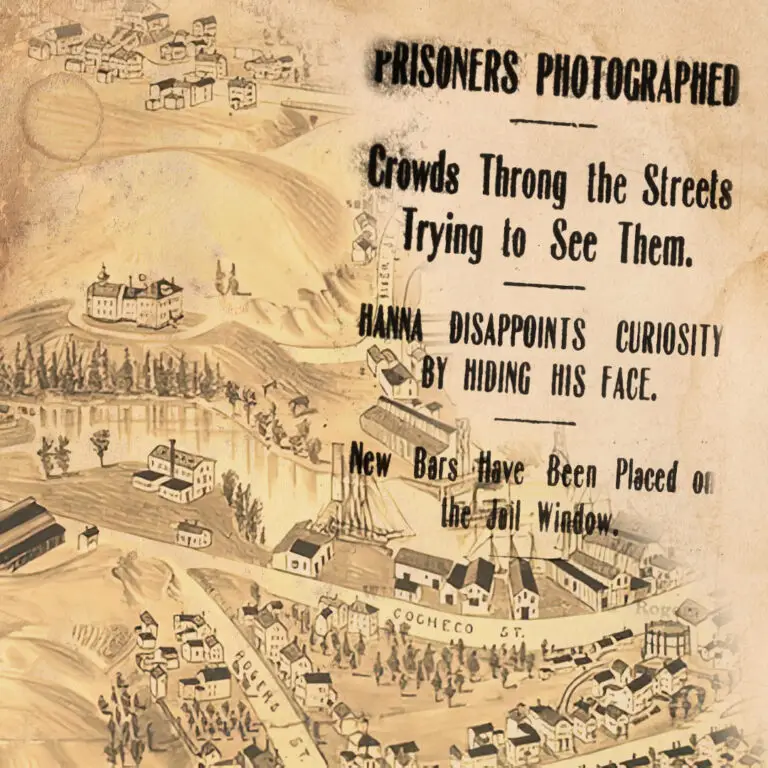
The case against William Hanna seemed airtight: $26 hidden in a sock, tools matching the damage at Hughes’ store, and a mysterious accomplice still on the run. But on Jan. 21, 1906, the “escape-proof” Strafford County jail proved anything but secure. In this second installment, Anthony McManus reveals how Hanna and two fellow inmates pulled off a daring breakout from Dover’s revolutionary rotary jail, using a smuggled saw and makeshift ladder to scale an 18-foot wall in their summer prison garb, in the dead of winter. With law enforcement launching a massive manhunt across New England and injured escapees hobbling through Dover’s neighborhoods seeking warm clothes, the community found itself gripped by both fear and fascination. How did a woman named Rosie Grenier outwit the jail’s security? Which escapee sought refuge at a Washington Street boarding house? And what role did a broken window and a cellar play in the dramatic recapture? Don’t miss this thrilling chapter that transforms a simple burglary case into an epic tale of criminal ingenuity and relentless pursuit.

William Hanna

The Burglar Who Wouldn't Quit: The William Hanna Saga (Part 3)

In Part 3, the dramatic manhunt reaches its climax as Dover authorities systematically track down the escaped inmates. McManus vividly recreates the recapture of the injured fugitives—John Rogers seeking refuge at a Payne Street boarding house, William Hanna hiding under assumed identity at a lodging house, and the arrest of Rosie and Elmo Grenier for their role in orchestrating the jailbreak. The investigation reveals the full scope of the conspiracy, from the smuggled saw purchased at Neal’s Hardware to the network of local accomplices who aided the escape. As three members of the Grenier family find themselves behind bars, Dover’s community witnesses firsthand the long reach of justice.
This is the third part of our seven-part series. If you haven’t read Parts 1 and 2, we encourage you to start from the beginning to fully experience this remarkable criminal saga that has captivated Dover’s citizens

William Hanna

The Burglar Who Wouldn't Quit: The William Hanna Saga (Part 4)

Justice moves swiftly as the Grenier conspirators face the music for their role in the great jailbreak. In this fourth installment, Anthony McManus takes us inside Dover’s packed courtroom as Rosie and Elmo Grenier appear before the judge, their carefully orchestrated escape plan now fully exposed. With testimony revealing how Rosie smuggled the saw from Neal’s Hardware Store and made her strategic visits to the jail, the community finally understands the full scope of the conspiracy that freed three dangerous criminals. Meanwhile, John Rogers faces additional charges, not just for his Christmas Day hen theft (committed, his attorney claims, to feed “a hard-working woman who had nothing to eat”), but for his role in the escape itself. As sentences are handed down and Rogers heads to state prison “at hard labor,” attention turns to William Hanna’s upcoming trial. But will the evidence that seemed so compelling before the jailbreak still hold up in court? Don’t miss this pivotal chapter as McManus explores how criminal justice operated in early 20th-century Dover, where even acts of apparent charity could land you behind bars.

William Hanna

The Burglar Who Wouldn't Quit: The William Hanna Saga (Part 5)

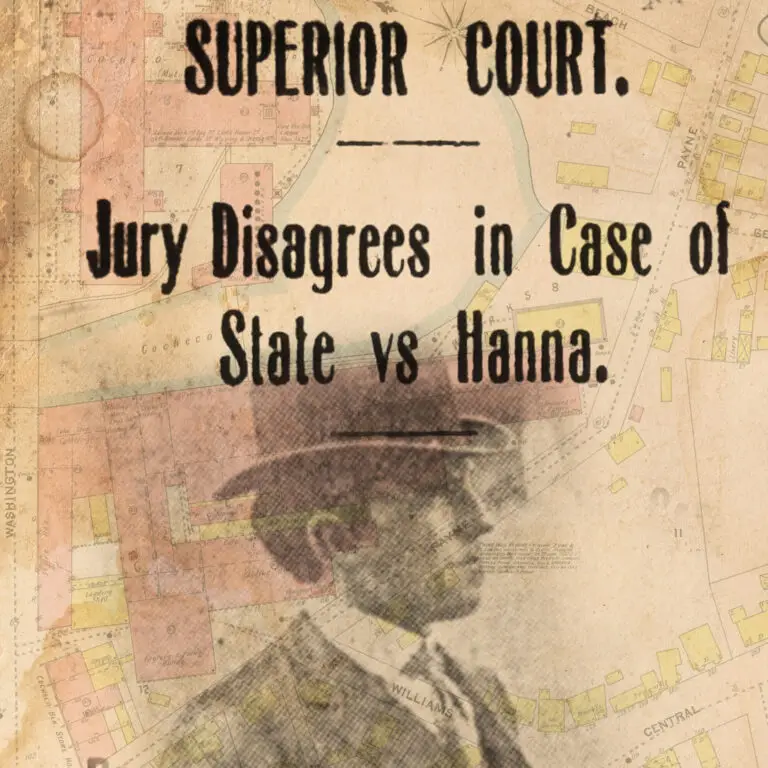
The moment of truth arrives as William Hanna finally faces trial for the November burglaries that started this saga. In this fifth installment, Anthony McManus takes us inside Dover’s Superior Court where a jury must decide Hanna’s fate based on the $26 found in his sock, the tools that allegedly matched the damage at Hughes’ store, and his suspicious behavior on the night of the crimes. With Solicitor Dwight Hall presenting the state’s case and Attorney William Pierce defending the accused burglar, the courtroom drama unfolds with conflicting testimony about searches, permissions, and evidence. Did Hanna give consent for officers to search his room, or did they force their way in? Was the money really from the Hughes break-in, or legitimate earnings from his various jobs? As Hanna takes the stand in his own defense, claiming the jailbreak was an impulsive decision when he “saw the others leave,” the jury faces a challenging decision. But when the verdict finally comes after hours of deliberation, the result surprises everyone—including the attorneys. Don’t miss this crucial chapter that proves justice in early 20th-century Dover was far from predictable.

William Hanna

The Burglar Who Wouldn't Quit: The William Hanna Saga (Part 6)

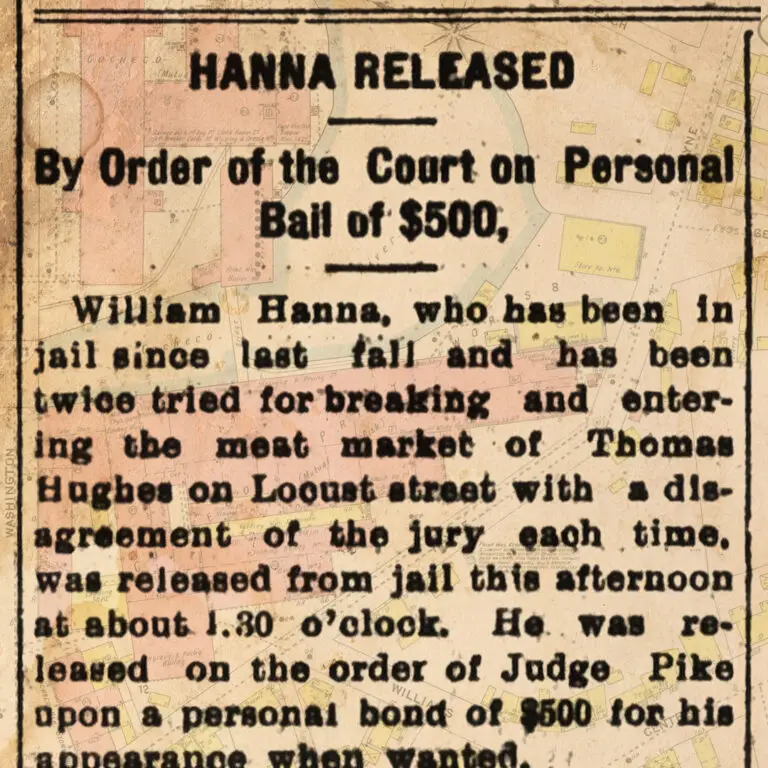
When one hung jury isn’t enough, Dover’s justice system tries again. In this sixth installment, Anthony McManus reveals the dramatic second trial of William Hanna, complete with an extraordinary jury selection that required Sheriff Parker to go outside the courthouse and summon people off the street to serve. As Attorney Pierce challenges the state’s evidence more aggressively, questioning Thomas Hughes’ memory of the exact bills stolen and whether a steak knife, not Hanna’s screwdriver, caused the cash register damage, new doubts emerge about the case. Sheriff Parker’s surprising testimony about the jailbreak adds an unexpected twist, while Dennis Demers, a young shoe shop worker, provides crucial expert testimony about why workers carry their own tools. But even with a more focused defense strategy and witnesses supporting Hanna’s claim of legitimate earnings, the jury deliberates all night without reaching a verdict. As the second hung jury is dismissed and heads to the local bank to collect their payment, Solicitor Hall faces a difficult decision: pursue a third trial or find another solution? Don’t miss this chapter, which explores the challenges of achieving justice when evidence and testimony remain frustratingly inconclusive.

William Hanna

The Burglar Who Wouldn't Quit: The William Hanna Saga (Part 7)

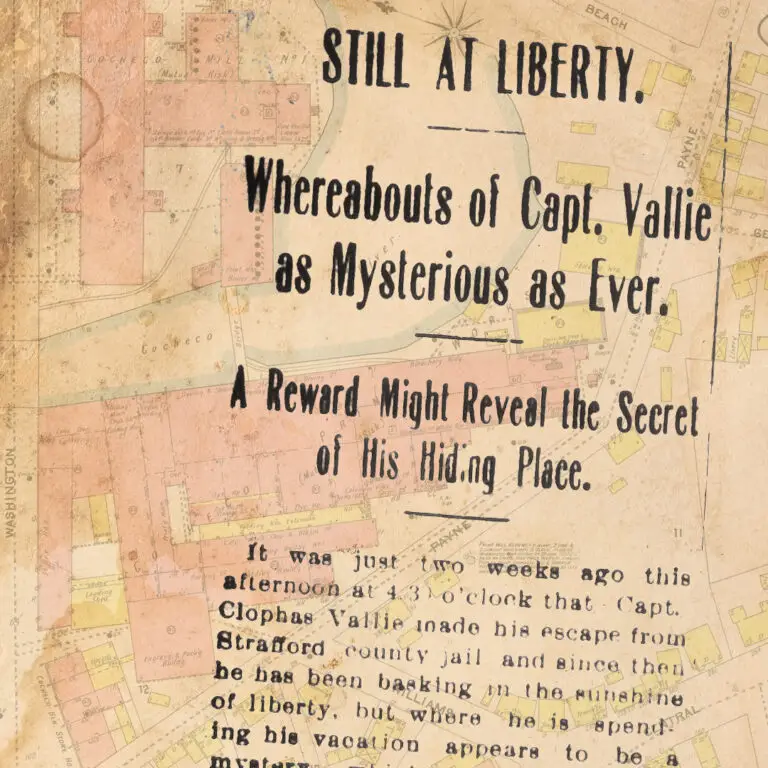
All good things must come to an end—including criminal careers. In this riveting finale to Anthony McManus’ seven-part saga, discover what happened to the players in one of Dover’s most persistent criminal cases after two hung juries left justice hanging in the balance. What became of the elusive Robert Broadbent, Hanna’s mysterious accomplice who vanished into thin air? Follow the sad tale of “Captain” Cleophas Valle, the youngest escapee whose life of crime led to an extraordinary courtroom confession about wrongful imprisonment, multiple jailbreaks, and a peculiar military title that defied explanation. Most importantly, learn William Hanna’s ultimate fate when he left Dover for Haverhill, Mass., and whether a burglar who “wouldn’t quit” could truly change his ways. McManus ties together the loose threads of this remarkable story, revealing how Dover’s loss became another city’s problem within mere days.

Harry Stackpole

Death at the Doctor's House: The Stackpole Affair (Part 1)

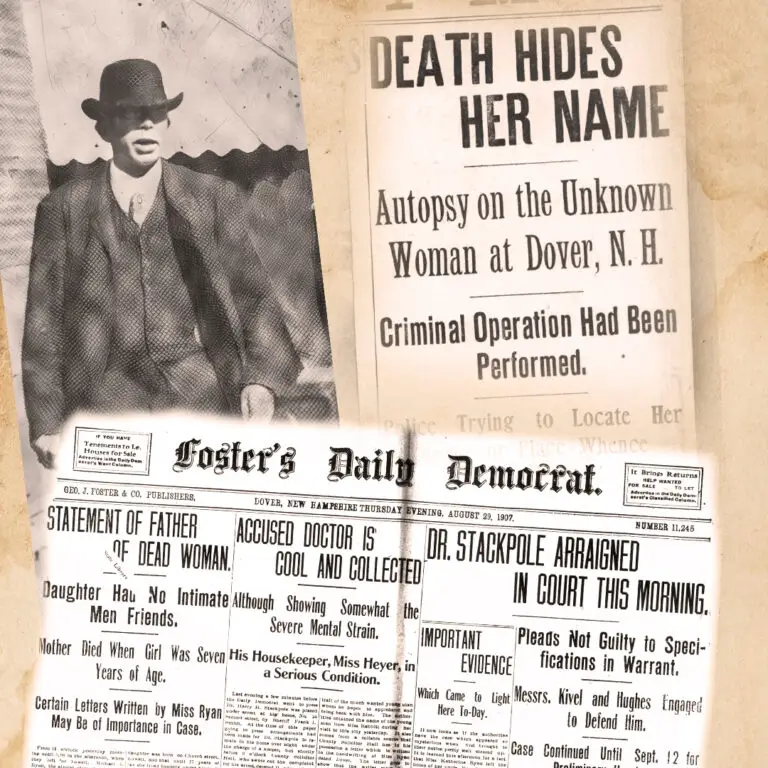
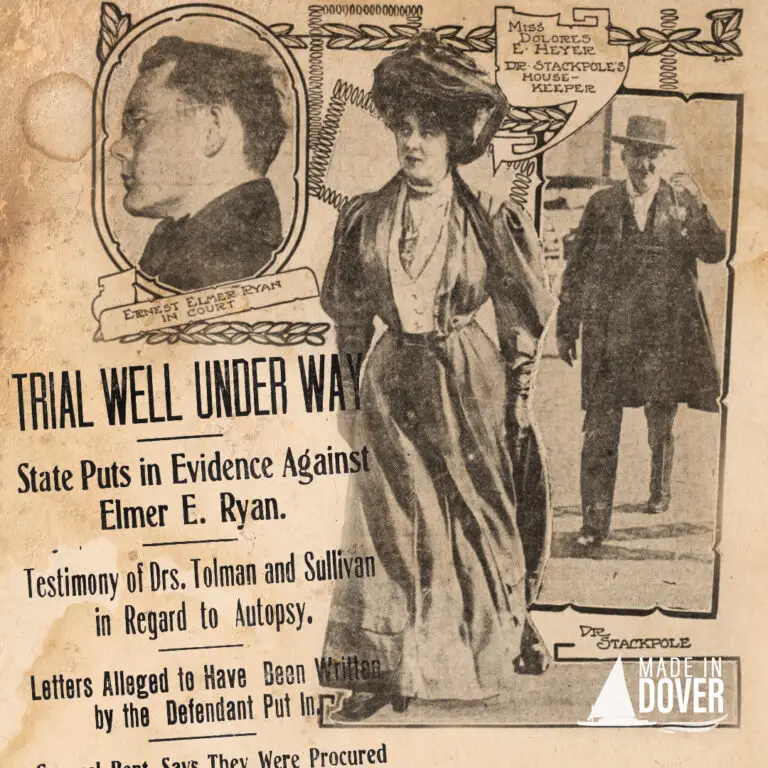
August 1907: A young woman’s body is discovered in the home of Dover physician Harry Stackpole, launching a sensational investigation that would captivate the entire community. “Hundreds of people” visited the local funeral parlor in hopes of identifying the mysterious deceased. When she was finally identified, authorities quickly charged Dr. Stackpole with causing her death, a grave accusation against a doctor from one of Dover’s most prominent families. In this first installment of a riveting five-part series, Anthony McManus traces the early days of the investigation, the involvement of County Solicitor Dwight Hall, and the surprising emergence of a second suspect, Elmer Ryan. Don’t miss this meticulously researched account of a case that dominated Dover’s headlines and exposed the shadowy underworld of illicit medical services in the early 20th century.

Harry Stackpole

Death at the Doctor's House: The Stackpole Affair (Part 2)

As Dover grappled with the mysterious death of Katherine Ryan at Dr. Harry Stackpole’s residence, attention turned to the doctor’s distinguished family legacy. In this second of five parts, Anthony McManus reveals the stark contrast between Harry Stackpole and his father, the renowned P.A. Stackpole, a Harvard-educated physician, community leader, and beloved Dover figure who once served as President of the New Hampshire Medical Society. Meanwhile, the investigation takes a dramatic turn with the appearance of Elmer Ryan at a Fitchburg, Mass., police station, claiming ignorance about Katherine’s death even as authorities work to establish his connection to the deceased. With the town buzzing over the scandal, crowds gather to witness Ryan’s transfer to jail, leading to an unexpected altercation involving a Rochester woman who “sailed into” some young onlookers. As the Stackpole case unfolds, don’t miss this fascinating chapter that explores both the respectable facade and shadowy underbelly of turn-of-the-century Dover.

Harry Stackpole

Death at the Doctor's House: The Stackpole Affair (Part 3)

The drama intensifies as Dr. Harry Stackpole and Elmer Ryan face preliminary hearings in Dover’s packed courtroom. In the third installment, Anthony McManus details the dramatic courtroom scenes where medical evidence is presented, witnesses are cross-examined, and housekeeper Emily Heyer collapses in a moment of high theater and must be escorted from the proceedings. Following the shocking revelations about Katherine Ryan’s death and the contrast between Harry Stackpole and his esteemed father, P.A. Stackpole, the legal machinery now moves forward with detailed testimony from medical experts, family members, and friends of the deceased. Handwriting experts analyze mysterious letters, Sheriff Smith defends his controversial interception of jail mail, and both defendants’ attorneys fight vigorously to dismiss the charges. Don’t miss this crucial chapter that brings us deeper into the web of evidence surrounding one of Dover’s most sensational cases, with the community watching every development and the final verdict still hanging in the balance.

Harry Stackpole

Death at the Doctor's House: The Stackpole Affair (Part 4)

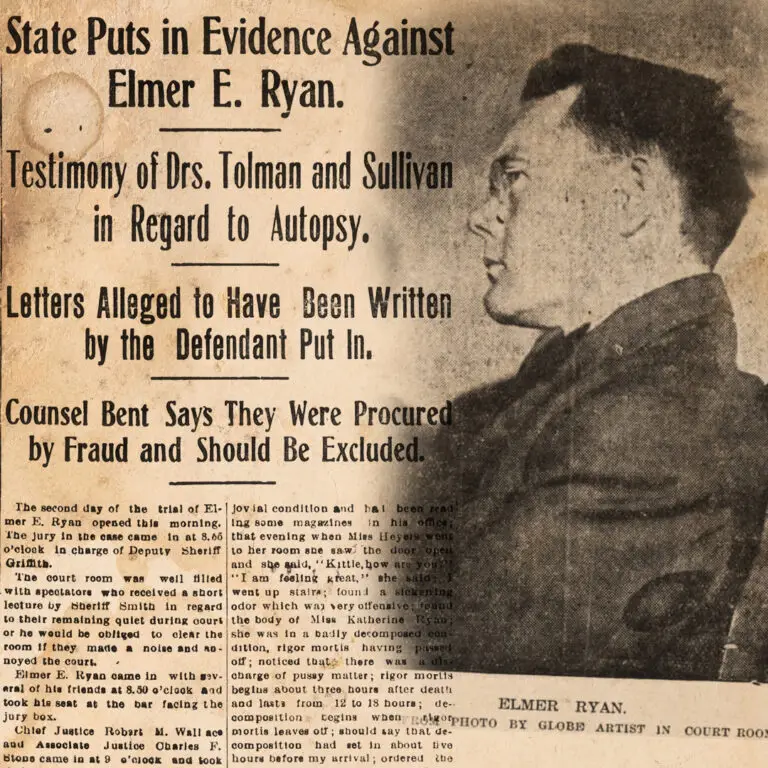
The courthouse doors open for Elmer Ryan’s dramatic trial in this riveting fourth installment of the Stackpole case. After months of preliminary hearings, collapsed witnesses, and mysterious letters, the full trial begins in December 1907 under the watchful eye of Chief Justice Robert Wallace. Anthony McManus captures the intensity of the packed courtroom as elite Dover citizens are selected for jury duty—including Washington Anderton, superintendent of Cocheco Mill #5, and the Honorable Joseph D. Roberts, a prominent Rollinsford farmer with impressive political connections. With Dr. Stackpole’s case severed from Ryan’s, the prosecution lays out its argument connecting Ryan to Katherine Ryan’s tragic death at the Stackpole residence. As medical testimony from Doctors Tolman and Sullivan unfolds, and the damning contents of intercepted letters are finally revealed to the jury, the trial builds to its conclusion. Don’t miss this penultimate chapter that brings us to the brink of a verdict in one of Dover’s most sensational and controversial cases, with one final twist awaiting in the series conclusion.

Harry Stackpole

Death at the Doctor's House: The Stackpole Affair (Part 5)

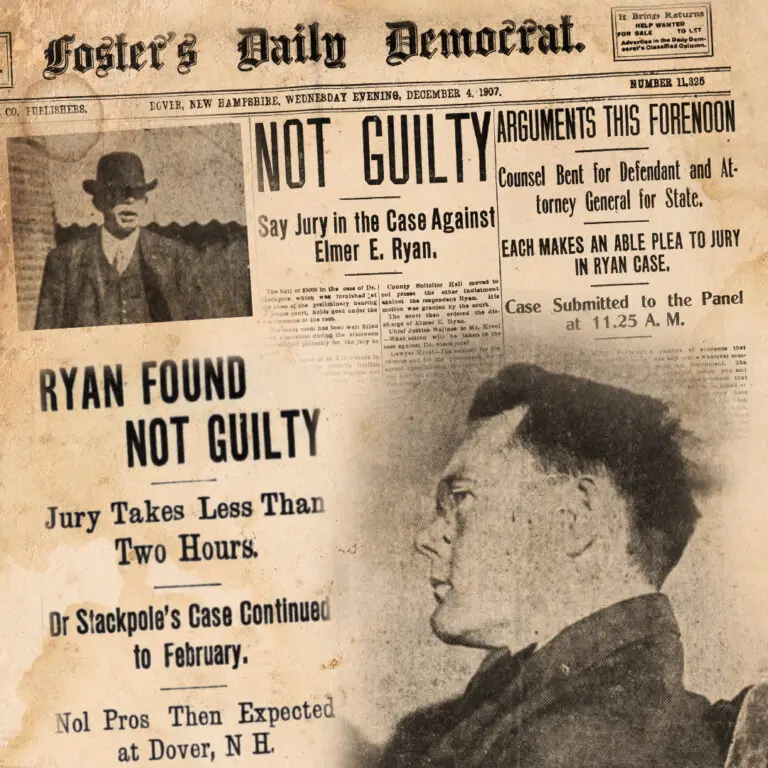
The stunning conclusion to Dover’s most sensational medical scandal arrives as Elmer Ryan’s fate is decided. In this final installment of Anthony McManus’ meticulously researched series, the jury returns after deliberating the evidence against Ryan—the mysterious letters connecting him to Katherine Ryan, the medical testimony about the cause of her death at Dr. Stackpole’s residence, and the complex web of relationships that brought her to Dover in August 1907. After following the investigation from its beginnings with an unidentified body, through the arrest of both Ryan and the respected physician from one of Dover’s prominent families, through dramatic courtroom collapses and revealing testimony, we now witness the ultimate resolution of this extraordinary case. But what of Dr. Stackpole himself? And what became of Emily Heyer, the housekeeper who discovered Katherine’s body? McManus ties up loose ends and reveals a surprising postscript about the courthouse records that adds one final layer of mystery to this remarkable story from Dover’s criminal past.

Walter Sterling Murder

Officer Down on Portland Avenue: Walter Sterling's Final Call (Part 1)

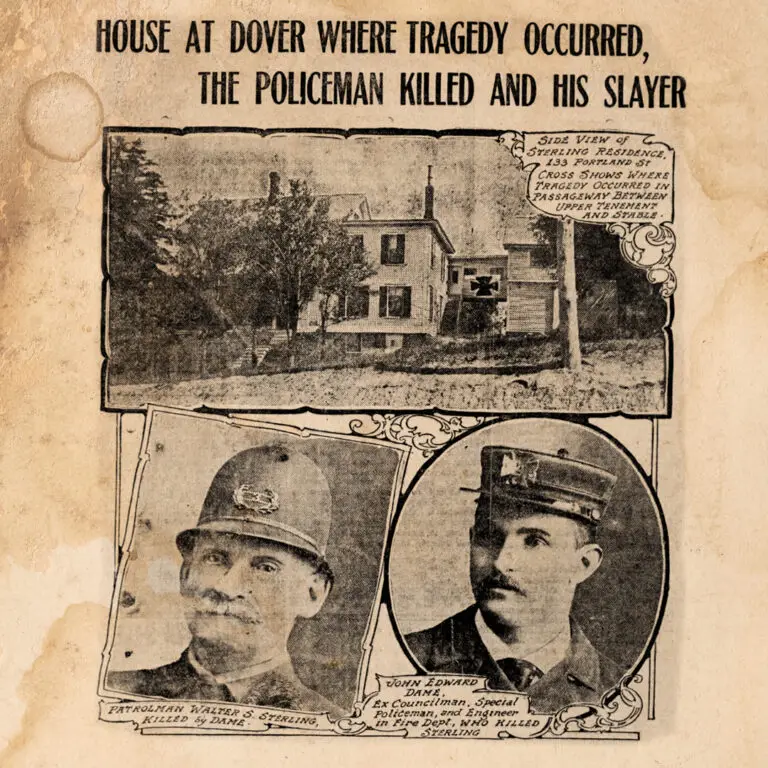
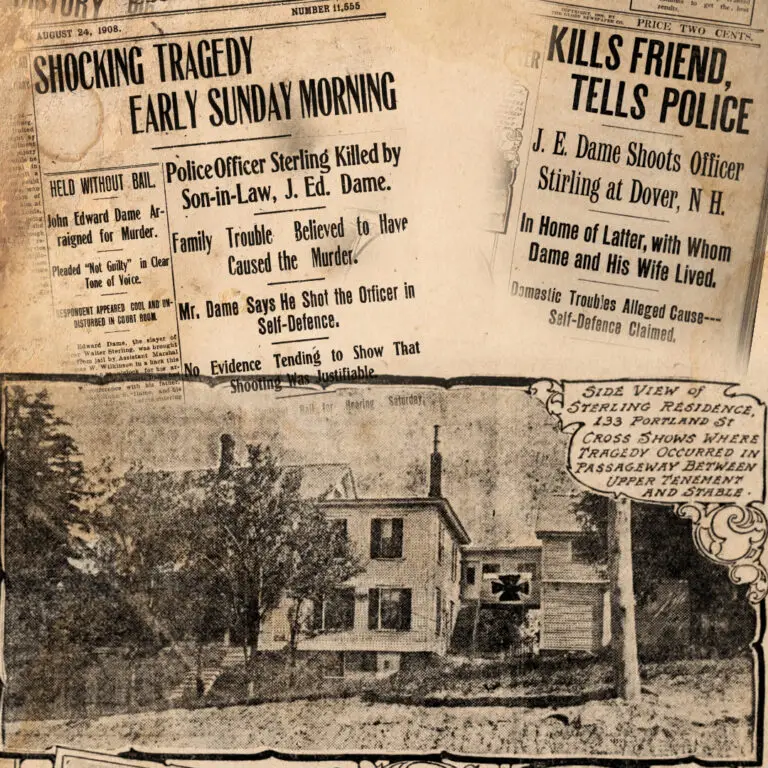
Remember Officer Walter Sterling from our first column? The friendly policeman who handled the bearskin theft has a much darker chapter in his story. In August 1908, this respected Dover officer met a violent end after being shot to death in his own home by his son-in-law, John Edward Dame. What led to this shocking domestic tragedy? In this first installment, Anthony McManus traces Sterling’s career from his gold badge presentation in 1891 to his final confrontation on Portland Avenue. Dame claimed self-defense against a threatening Sterling, but neighbors heard breaking glass and gunshots at 4:15 a.m. When the first officer arrived, Dame calmly handed over his revolver with the chilling statement: “Walter tried to do me up and I got the best of him.” Don’t miss this tale of family tension turned deadly, with part two revealing the sensational trial and its unexpected outcome later this week.

Walter Sterling Murder

Officer Down on Portland Avenue: Walter Sterling's Final Call (Part 2)

After Officer Walter Sterling’s shocking death at the hands of his son-in-law, the community awaited justice. In this riveting conclusion, the courtroom drama unfolds as John Edward Dame stands trial for murder in January 1909. With the defendant freely admitting he fired the fatal shot, what possible defense could save him from conviction? Attorney John Kivel introduces a shocking theory about Sterling’s mental state and alleged threats, while witness testimony reveals mysterious family tensions, including opposition to Sterling’s plans to remarry. But the most startling moment comes when Sterling’s own physician takes the stand with testimony “unfit for publication” in the newspapers of 1909. Anthony McManus reveals the surprising verdict and the unexpected medical evidence that may have swayed the jury in one of Dover’s most sensational trials of the early 20th century.

Murder on Kirkland

Murder on Kirkland Street: The Glass Family Tragedy (Part 1)​

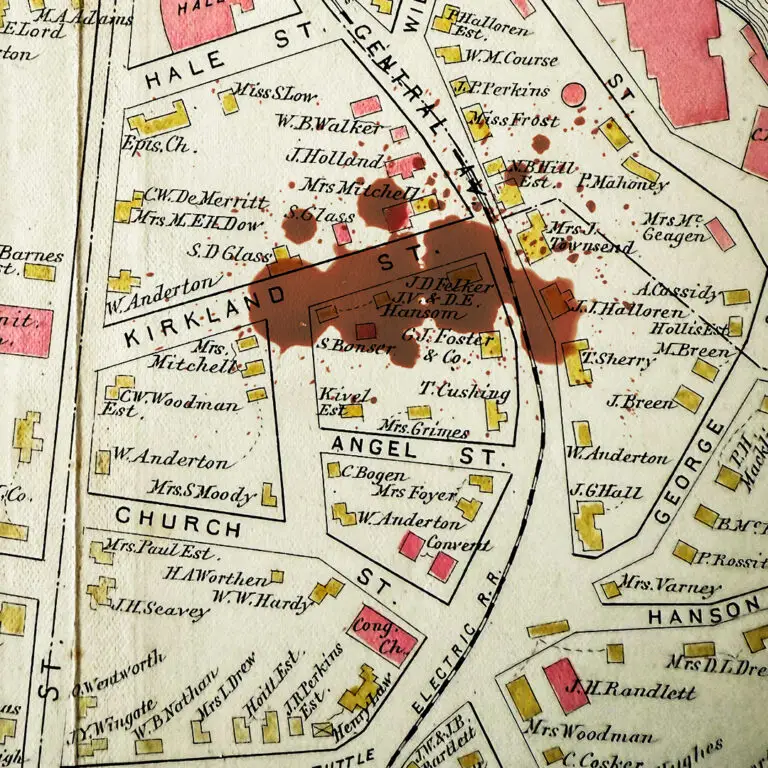
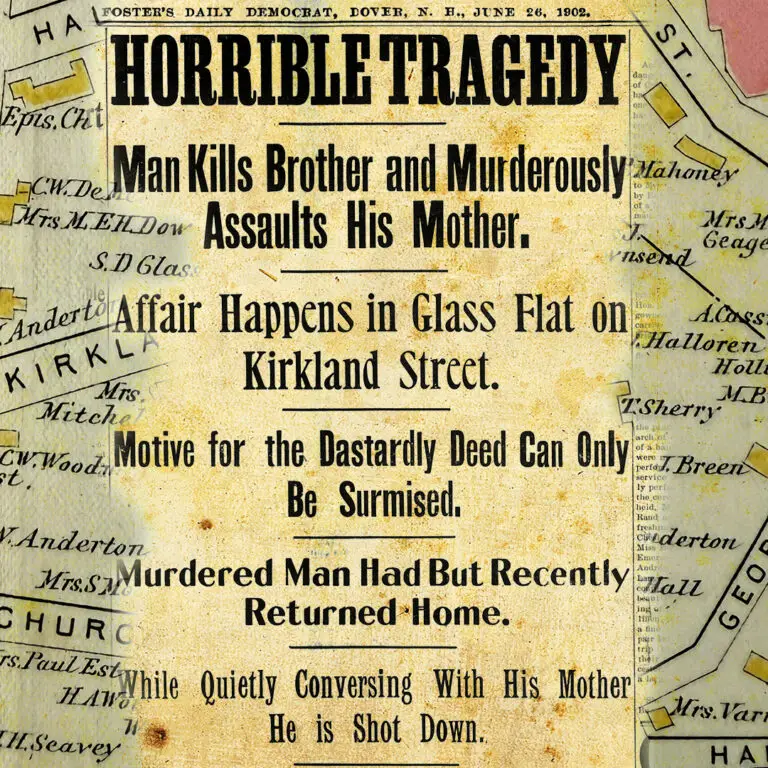
In June 1902, Albert “Martin” Glass made a bizarre visit to the Dover police station, asking if he was wanted for any crime. Days later, his mother staggered, bleeding, into a neighbor’s apartment while Martin announced, “I have fixed them both this time.” What followed was a citywide manhunt using horse-drawn carriages and a grim discovery in the Glass family apartment. In this first installment of a two-part story, Anthony McManus recounts the shocking murder of Harvard Medical School student George Glass by his troubled brother, and offers a fascinating glimpse into turn-of-the-century Dover, when emergency transport meant rushing to nearby livery stables and doctors doubled as church tenors. Don’t miss the conclusion in Saturday’s edition, when the legal system confronts the complex questions of Martin’s sanity and culpability.

Murder on Kirkland

Murder on Kirkland Street: The Glass Family Tragedy (Part 2)

What becomes of a man who kills his brother and brutally attacks his mother? In this concluding installment of the shocking Glass family tragedy, Anthony McManus reveals the legal and medical aftermath of Martin Glass’s violent outburst. Follow the case as medical experts examine Glass’s mental state, uncovering a history of “organic brain degeneration” dating back to a childhood head injury. Witness the fascinating intersection of early 20th-century criminal justice and mental health treatment as authorities grapple with questions of sanity and culpability. McManus ties up the loose ends of this Dover tragedy with poignant details about the final resting places of the Glass family members—and one telling absence. Don’t miss this conclusion to one of Dover’s most disturbing family tragedies from 1902.

Dover Horse Thief

Six Years on the Run: Dover's Notorious Horse Thief

Not all criminals in Dover’s past were murderers or violent outlaws. Meet Thomas Coleman, a man with a peculiar specialty: stealing horses. When Coleman snatched a mare from James Frank Seavey in 1901, he had no idea he’d targeted one of Dover’s most prominent businessmen. Follow the trail of this hapless thief as he flees to Maine, serves time there, then faces another horse theft charge in Rockingham County before finally answering for his Dover crime — nearly six years later. Anthony McManus reveals the fascinating journey of this persistent equine bandit and offers a glimpse into early 20th-century justice and the long arm of the law that would patiently wait years to bring a criminal to justice.

Third Street

The Curious Case of the Stolen Bear Skin​

Step into Dover’s criminal past as historian Anthony McManus kicks off his new series “Crimes Along the Cochecho” with a peculiar theft from 1905. When Peter Gurgeon (or was it Turgeon?) snatched a bear skin from the American Fur Company, he thought pawning it nearby was a brilliant plan. 

Want to know when new “Crimes Along the Cochecho” articles are published? Sign up below to be notified as soon as new installments are available.

Name